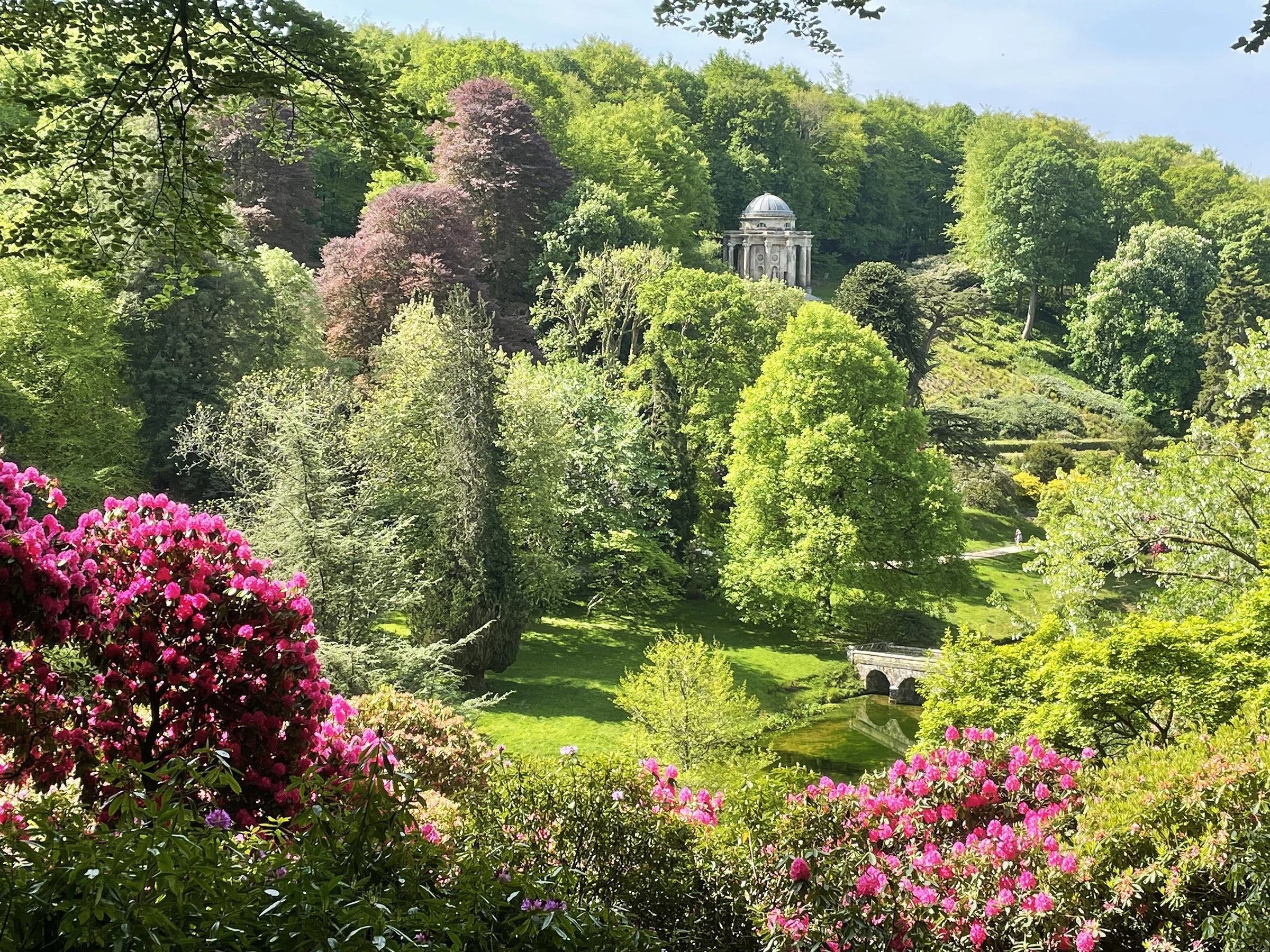
Dorset & Somerset
2702 | 28 April to 5 May | 8 days | maximum number 12
Stourhead, Cannington Walled Garden, Westbrook House, Compton Acres, Kingston Lacy, Hestercombe, East Lambrook Manor, Abbotsbury Subtropical, Mapperton, Sherborne Castle, Forde Abbey, Minterne House, Sir Harold Hillier Gardens and more…
Where the Jurassic Coast meets the Cheddar Gorge…
Welcome to Dorset and Somerset, the jewels of the south west that too few know about, but we’re going to discover.
This new tour of Dorset and Somerset takes us to some of the finest spring gardens in England. Gardens we have not visited for some years, like Compton Acres and Sherborne Castle, gardens we have only recently discovered, like the Himalayan Gardens at Minterne, gardens we are excited to visit for the first time, like Westbrook House and the Walled Garden at Cannington, and gardens we go out of our way to visit at every opportunity, the stars of the show, like Hestercombe and Stourhead.
Gardens aside, we’ll visit a medieval Swannery, a traditional English willow grower and basket weaver, an Iron Age Hill Fort, and perhaps the finest Gothic fan-vaulting in England.
It’s a fantastic tour. The landscapes are wonderful, the food is excellent, and we will stay at the comfortable and oh-so-friendly, family-run Grange at Oborne – for the entire tour. No moves, no repacking.
Prices
Per person, sharing
3,250 GBP | 4,550 USD | 3.575 EUR
Prices are per person, sharing a double or twin room
Per person, single occupancy
3,600 GBP | 5,040 USD | 3.960 EUR
Prices are per person, for the single occupancy of one room
Booking, interest, questions and payments
BOOK PLACES ON THIS TOUR
EXPRESS INTEREST & HOLD PLACES ON THIS TOUR
ASK QUESTIONS ABOUT THIS TOUR
Please read the Booking & Paying page and the comments in the additional information below.
Itinerary
Scroll down for a tour area map and additional information – accommodation, eating, and other attractions, etc
D1 Wednesday, 28 April
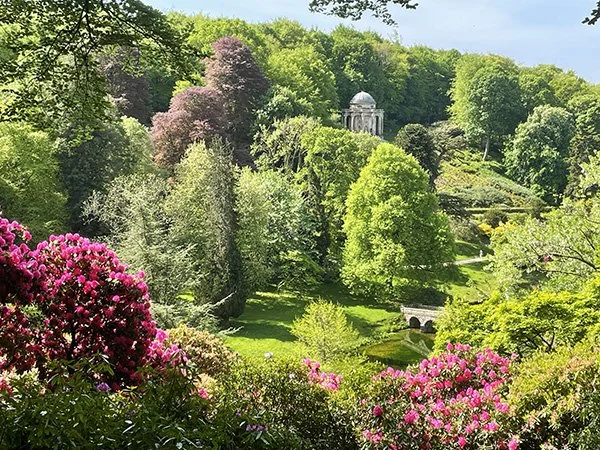
The Temple of Apollo, Stourhead
Stourhead
Tim will meet you at the Sheraton Heathrow Hotel at 10:00, and once we’ve loaded the minibus, we’ll set off south-west to Stourhead.
One of England’s great landscape gardens, Stourhead was created in the eighteenth century by Henry Hoare, who, inspired by the landscapes and classical buildings of his Grand Tour, created his garden in a secluded valley around a beautiful lake. It is, in truth, a cleverly and carefully composed series of views in which temples, grottos, bridges and woodland appear and disappear as you follow the lakeside path. The Hoare’s Palladian mansion completes this remarkable setting, and the house itself contains an impressive collection of paintings, furniture and family treasures.
The gardens are at their best in spring, when the woodland is a riot of flowering rhododendrons and azaleas, and we’ll have plenty of time to explore the gardens and the house, and have time for lunch too.
Stourhead is a little more than thirty minutes from The Grange at Oborne, our home for the next seven nights, where we plan to be by late afternoon, in good time to check in and relax, before drinks and dinner at the hotel.
Today's driving is about 120 miles/190 km
D2 Thursday, 29 April
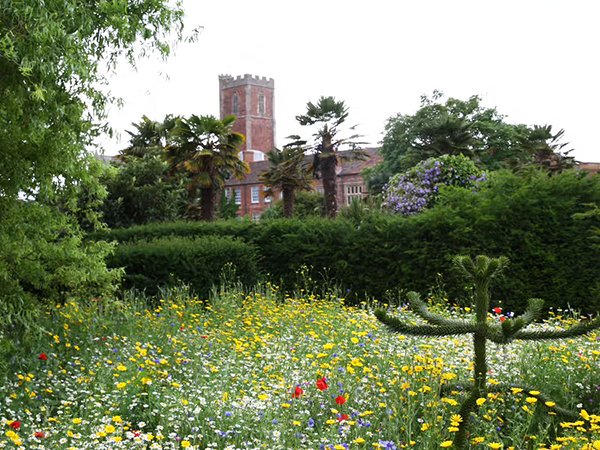
Cannington Walled Garden
Cannington Walled & Westbrook House
We spend the day in Somerset, visiting two gardens we haven’t previously visited, starting at The Walled Gardens of Cannington, part of Cannington College, teaching horticulture and related subjects to local students. Historically, the gardens were part of an important 12th-century Priory, and many of its fine medieval buildings still exist, including the garden walls. The gardens today have undergone extensive redevelopment and now have both classic and contemporary features, boast a botanical glasshouse, showcasing exotic plants from around the world, and two smaller gardens, The Bishop’s and Southern Hemisphere Garden.
We’ll have lunch at Cannington’s Tea Rooms before a private, guided tour of the gardens at Westbrook House, the home of Garden Designer Keith Anderson and Painter David Mendel. Set within four acres, and created since 2004, the garden has three distinct formal areas around the house. Clipped box and yew contrast with herbaceous borders and cottage-style plantings, whilst beyond are mown paths, peppered with species and wild roses. The whole is rounded off with two orchards interplanted with shrub roses and philadelphus.
We’ll stop for dinner en route home at The Queen’s Arms in Corton Denham.
Today's driving is about 105 miles/170 km
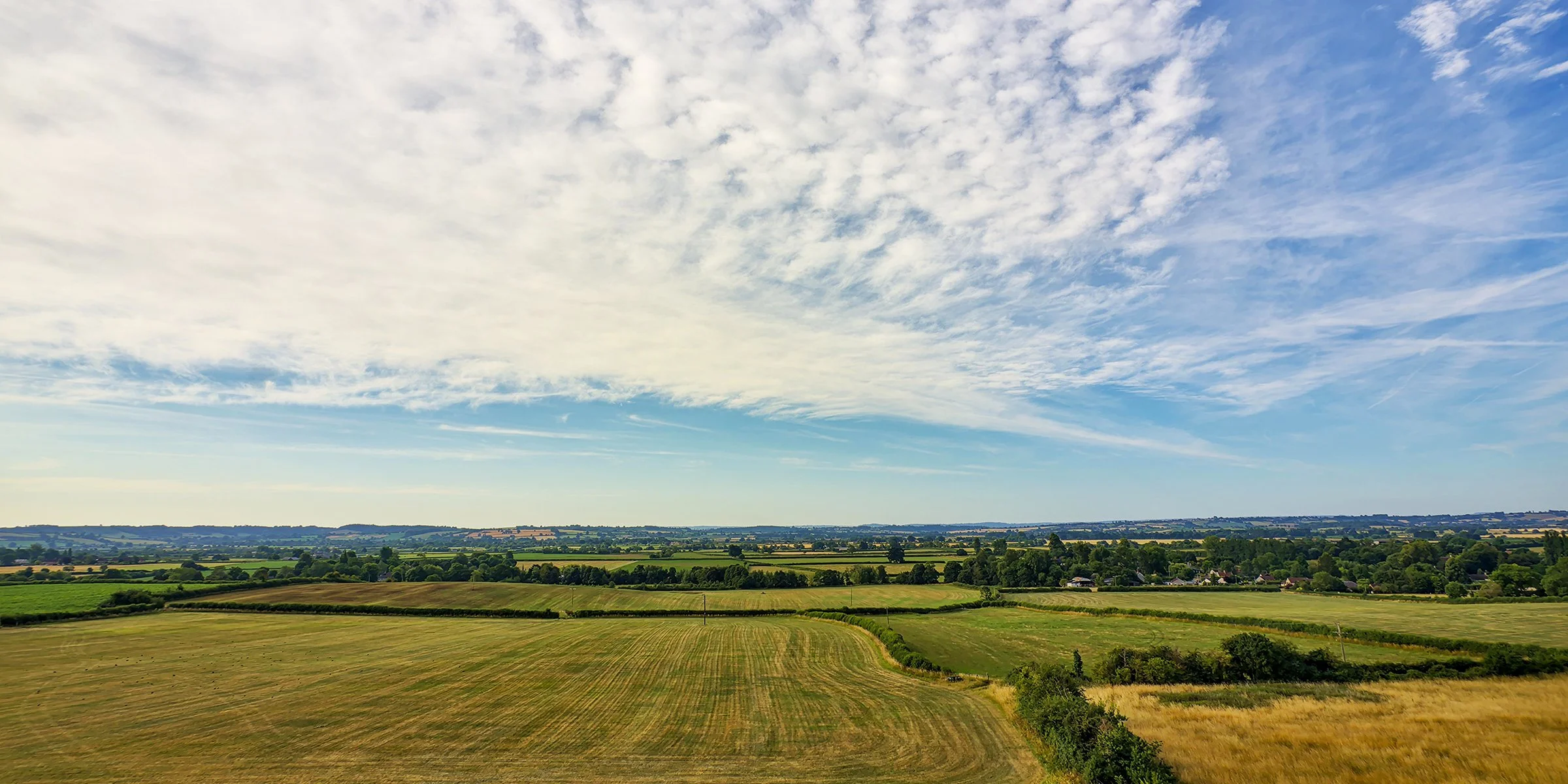
Somerset Levels
The Somerset Levels are a remarkable landscape of water meadows, wetlands and ancient peatlands, lying almost at sea level between the Mendip and Quantock Hills. For centuries, the rich, damp pastures have provided ideal conditions for dairy farming, and the area remains an important centre for Somerset’s famous milk and cheese production. In winter, the fields become a vast expanse of shallow water, attracting thousands of wildfowl and wading birds, while in summer they provide lush grazing for cattle.
The Levels are also closely associated with the cultivation of willow, traditionally grown in the wet ground and harvested for basket-making and thatching. Today, the willow beds, rhynes and drainage ditches form an intricate pattern across the landscape, alongside an increasing emphasis on restoring wetlands and creating habitats for wildlife. It is a landscape shaped as much by water and farming as by nature, and one whose character changes dramatically with the seasons.
D3 Friday, 30 April
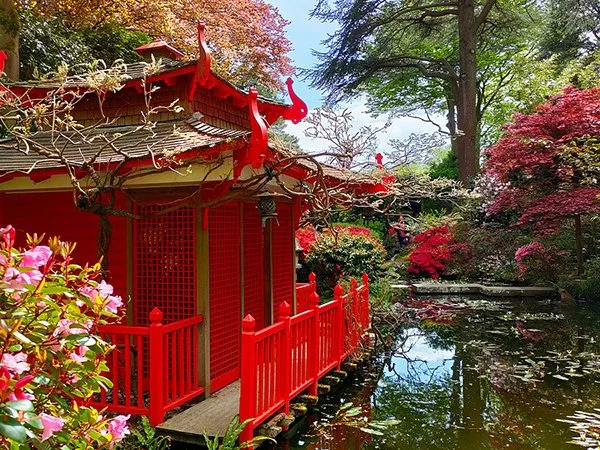
The Japanese Garden, Compton Acres
Compton Acres & Kingston Lacy
We start the day in Bournemouth, with a visit to Compton Acres, a garden we haven’t visited for some years. Constructed in 1920, the 10-acre, Arts & Crafts-style garden was created on dry, sandy heathland and opened to the public shortly before the Second World War. It features five main themed gardens, each reflecting the worldwide travels of its creator and, besides the well-known Italian Gardens, includes a Rock & Water Garden, a Heather Garden, and a Japanese Garden, complete with its own traditional tea house. They say that Compton Acres is “…recognised as one of the most important ornamental gardens in England…”. Let’s see.
We’ll have lunch at Compton Acres before driving away from Bournemouth for an afternoon exploring Kingston Lacy. Home to the Bankes family for over 300 years, Kingston Lacy is an opulent family home built to resemble a Venetian Palace. Now in the care of the National Trust, the 8,500-acre estate is home to a significant art collection (see here), including paintings by Sir Peter Lely, Titian, and Rubens, and Bankes' collection of ancient Egyptian artefacts, the largest private collection in the UK. The family’s wealth came from extensive estates and profitable marriages, including inherited wealth from Caribbean plantations supported by the Atlantic slave trade.
It is not the horticultural highlight of the week, although it does have a formal garden befitting the house, but it is difficult to drive past Kingston Lacy and not visit its treasures.
We’ll return to The Grange for dinner.
Today's driving is about 85 miles/135 km
D4 Saturday, 1 May
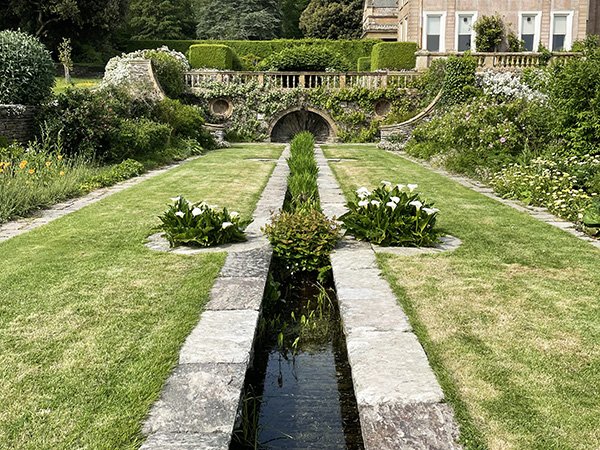
East Rill, Hestercombe
Hestercombe & East Lambrook Manor
Returning to Somerset, our first visit of the day is to Hestercombe, a property owned by the Warre family from 1391 until 1872, and it was a Warre who, after inheriting the estate in 1750, laid out the Landscape Garden as we see it today. The estate was purchased in 1873 by Viscount Portman (think Portman Square, London), who remodelled the house and created the Victorian Terrace. But it was his grandson who, in 1903, commissioned Sir Edwin Lutyens to create a new formal garden with a planting scheme designed by Gertrude Jekyll, and it is this garden that is arguably the finest example of their many collaborations.
We’ll have lunch at nearby Coates English Willow. This part of Somerset, the Somerset Levels, was the most important wetland area in Britain; a unique landscape famous for its willow growing and basket making. They have an interesting museum and a wonderful shop, both of which we’ll visit.
And finally to East Lambrook Manor, a wonderful mid-century cottage garden created by renowned plantswoman and author Margery Fish. Known for its informal charm, the garden features winding paths and themed garden rooms, including silver and white gardens and the famous ‘ditch’, home to her extensive snowdrop collection. Sensing the impending war, Margery and her husband moved from London to the countryside, where, with two acres, she started gardening. She flourished, becoming a pioneer of low-maintenance gardening in austerity-driven post-war Britain and a champion of the free-flowing, cottage-garden style of gardening.
It is a short drive to The Barrington Boar for dinner at our favourite eatery.
Today's driving is about 100 miles/160 km
D5 Sunday, 2 May
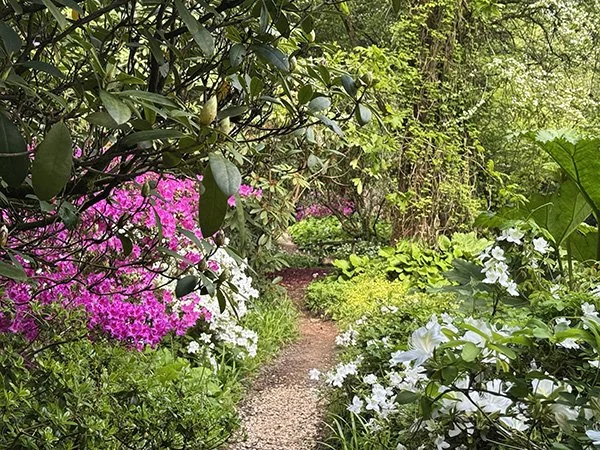
The Himalayan Garden, Minterne
Abbotsbury & Minterne
Our day starts on the south coast at Abbotsbury, a pretty Dorset village with a long recorded history. A Benedictine Monastery was founded here in 1044 by Orc, a steward of King Cnut and, to be self-sufficient, the monks farmed, fished, and kept swans. The earliest record of a Swanherd dates to 1393, when William Squillor ‘Keeper of Swans’ was mentioned in the court rolls.
When the monastery was dissolved, it was leased to the Strangeway family. They made it their home, and what was their walled kitchen garden now lies at the heart of Abbotsbury Sub-tropical Gardens. It is a mixture of formal and informal planting, and houses the famous collections of Camellias, Magnolias, Rhododendrons and Hydrangeas. In the Victorian and Edwardian eras, the family sponsored plant-hunting expeditions, resulting in one of the largest collections of Mediterranean plants in Britain.
Next, the Swannery, the only remaining managed colony of Mute Swans in the world, for a brief visit to see the swans and help with the midday feeding.
We’ll have lunch at the Swannery and stop to take in the wide-ranging views across the Dorset coast at Hardy Monument, before our final visit of the day at Minterne and its Himalayan garden. For years we have driven past Minterne, vaguely aware of its presence, until we visited it last spring, and we were so glad we did. The garden boasts a unique collection of Himalayan magnolias, rhododendrons and azaleas all set out along a wonderful, mile-long woodland walk. It is quite spectacular.
We return to The Grange for Roast Sunday Dinner!
Today's driving is about 70 miles/110 km
D6 Monday, 3 May
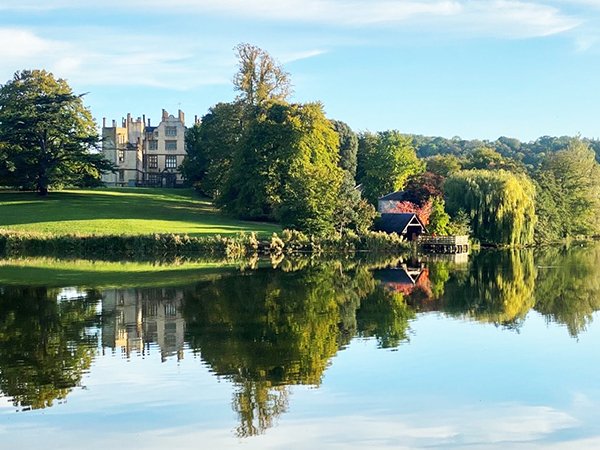
Sherborne Castle Gardens
Sherborne Castle, Abbey & Town
Today is a quiet day with a late start, an early finish and very few miles on the clock. We’re going to stay in and around the neighbouring market town of Sherborne, arguably one of the most beautiful towns in England. It is medieval, mellow-stoned, and has a reputation for art, antiques and independent stores.
We’ll begin by exploring Sherborne Castle and its garden. Built by Sir Walter Raleigh in 1594, and home to the Wingfield Digby family since 1616, this historic house reflects the styles of over 400 years of English history.
Its 11th-century Grade I-listed garden pre-dates its house, though the garden we see today is largely ‘Capability’ Brown’s 18th-century landscape garden; an impressive 42-acre garden, set against the backdrop of a 50-acre lake, and all largely untouched since Brown’s day.
We’ll have lunch at the Walled Garden Restaurant, and then spend the early afternoon exploring the town and visiting Sherborne Abbey, one of England’s most beautiful parish churches. Founded in 705 by St. Aldhelm, Sherborne Abbey has developed from Saxon cathedral to the Gothic church it is today; its spectacular fan-vaulted roof is something to behold and is the earliest great fan-vaulting in England, and possibly the finest.
We will return early to The Grange and dine early.
Today's driving is about 15 miles/25 km
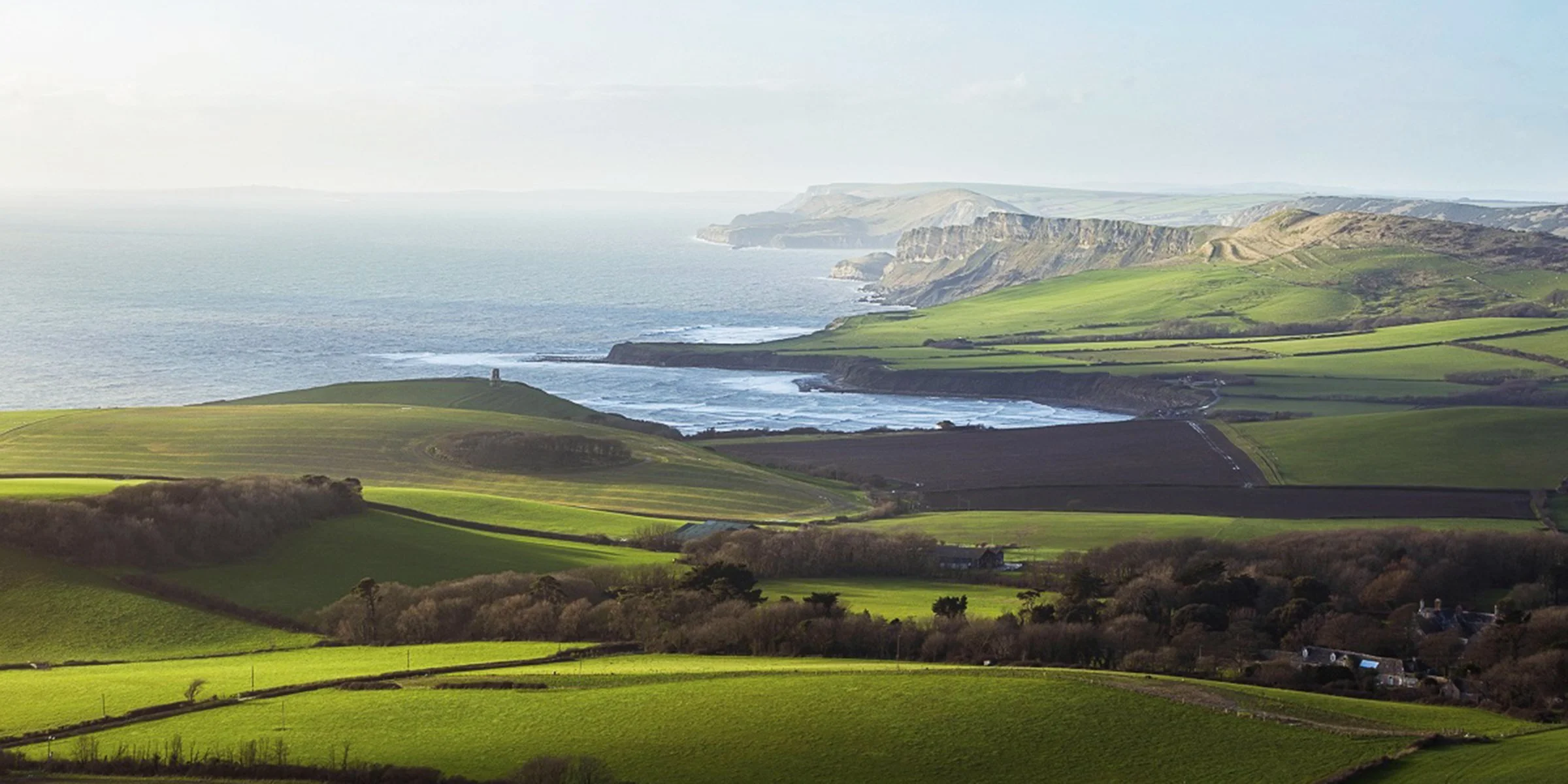
Dorset
Dorset’s landscape is one of remarkable variety and drama, where soft, pastoral countryside meets one of England’s most striking coastlines. Inland, a patchwork of rolling hills, wooded combes, and hidden valleys gives way to a shoreline of sweeping bays, chalk cliffs, and golden stone villages that seem untouched by time. The meeting of land and sea is ever-changing here, shaped by erosion and light, lending the county a sense of quiet dynamism. Dorset feels both deeply rooted and gently wild—a place where history, geology, and rural life are woven into a landscape of enduring beauty.
D7 Tuesday, 4 May
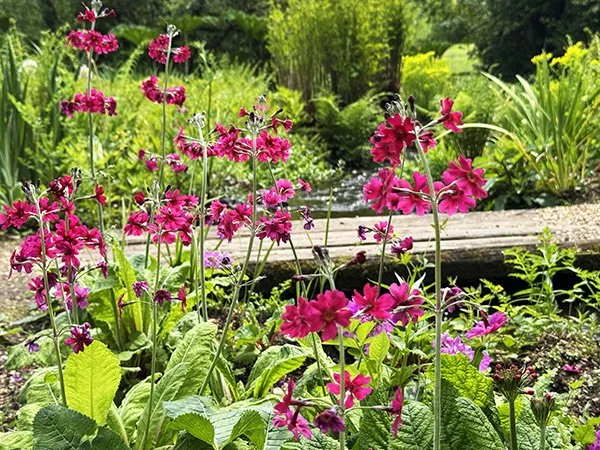
Primula Candelabra in the Bog Garden, Forde Abbey
Forde Abbey & Mapperton
Our day starts with a long and leisurely visit to Forde Abbey. Our third abbey in three days, this one a 12th-century foundation which flourished for four hundred years and became one of the richest and most learned institutions of its kind in England. Like the others, it fell foul of Henry’s break with Rome and was dissolved in 1539. Fast forward to 1905, when Elizabeth and Freeman Roper moved in; their great-granddaughter, Alice, and her husband Julian, are the current custodians.
The Mortlake Tapestries are the Abbey’s most important works of art. They are woven from the cartoons painted by Raphael, and depict scenes from the lives of St Peter and St Paul. The original tapestries were commissioned for the Sistine Chapel and were woven in Brussels in about 1520. This set was made in London at the Mortlake factory a century later.
The award-winning gardens are a treasure, especially so in spring when the tulip display is at its height, the arboretum is full of pink magnolia blooms, and the grounds are covered in swathes of spring bulbs.
We’ll have lunch at Forde Abbey before our final Dorset garden visit, to the Italianate Gardens at Mapperton House. The gardens were designed in the 1920s by Ethel Labouchere in memory of her husband and were inspired by Harold Peto’s Italianate style. With a deft touch, she combined classical formality with softened planting, and enhanced it with yew and box hedges, local Blue Lias paving and honey-hued Hamstone walls. The terraces continue to spring-fed ponds and the beginnings of the wild garden, and were further enhanced in the 1960s with the addition of an orangery offering sweeping views across the valley. From the courtyard entrance to the croquet lawn, the garden gradually unfurls, revealing a spectacular descent into the valley below.
We return to The Grange, one last time, for our end-of-tour dinner.
Today's driving is about 65 miles/105 km
D8 Wednesday, 5 May
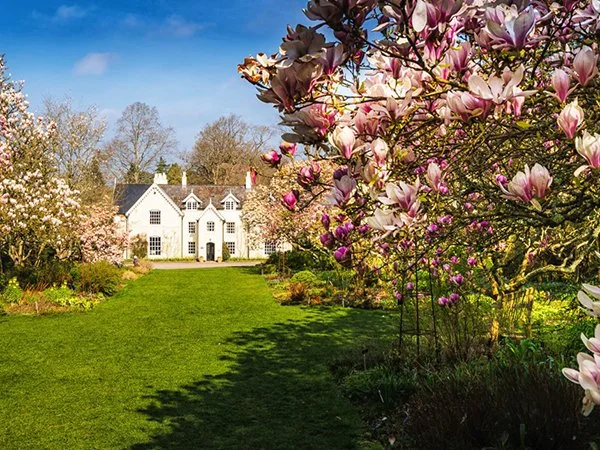
Sir Harold Hillier Gardens
Sir Harold Hillier Gardens
Our final visit of the tour is to the Sir Harold Hillier Gardens, halfway between The Grange and Sheraton Heathrow. Established in 1953 by the distinguished plantsman Sir Harold Hillier, the gardens are renowned for the quality and variety of planting. The 180 acres of internationally renowned gardens contain a collection of over 42,000 plants from temperate regions around the world.
Spring interest includes magnolias and camellias, with some spectacular azaleas and rhododendrons, and the Centenary Border, the longest mixed double border in the country. It is a veritable fest whatever the season.
We’ll have lunch before our return drive to the Sheraton Heathrow Hotel, where we expect to be by 14:30 and where the tour ends.
Today's driving is about 125 miles/200 km
Onward travel
Please let us know if you are staying in Britain and don't wish to return to Heathrow. We will assist you, if we can, in getting to your next destination.
Maps and additional information
Tour area map
Additional information
Sleeping
We stay at just one hotel, The Grange at Oborne, for the whole tour; all seven nights.
The Grange epitomises what we mean by “we stay in comfortable, family-run, or independently owned inns and hotels in attractive locations…”. Run by husband-and-wife team Jon and Jenny, with a brilliant team of friendly and attentive staff.
We have stayed at The Grange several times; we love it, and our customers love it.
Eating
The kitchens at The Grange are excellent, and we will dine in on five evenings, including Roast Dinner on Sunday evening, and dine out on two evenings.
At The Queen’s Arms, in Corlton Denham, just north of The Grange, and at The Barrington Boar, in Barrington, one of our favourite eateries anywhere.
Additionally, we will have lunch at The Lemon Tree cafe when we visit Coates English Willow Centre.
Other attractions
We plan to visit The Swannery at Abbotsbury, a 14th-century Swannery, and the world’s only managed colony of nesting Mute Swans and Coates English Willow, a traditional family business founded by willow grower and merchant Robert Coate in 1819.
We’ll also stop at the Hardy Monument, Pilsdon Hill and the Cerne Abbas Giant.
Bedrooms & upgrades
Ordinarily, we book standard rooms (however so described by the hotel) for all our customers, and these rooms may vary, in size and features, from room to room within the hotel.
Single travellers
Single travellers will have their own room, typically a small double room or, occasionally, a twin room.
Upgrades
If you would like to upgrade your room, please look at the hotel’s website and then contact us with your request.
Do not contact the hotel directly.
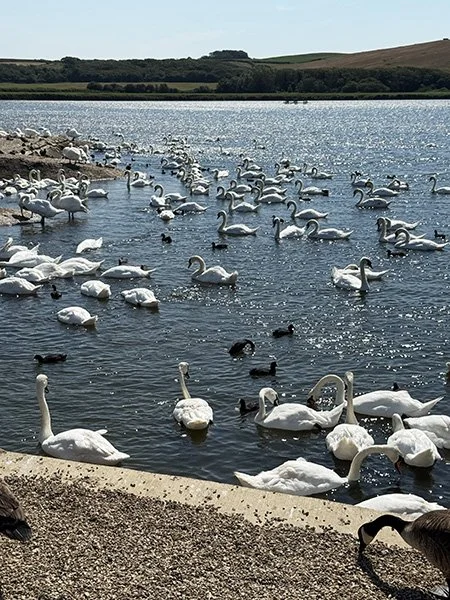
Mute Swans at The Swannery, Abbotsford
Joining instructions
The meeting arrangements are set out in Day 1 of the itinerary, above, and will be confirmed by email 13 weeks before the tour starts.
Meeting points
The Sheraton Heathrow Hotel is on Colnbrook Bypass, on the northern edge of Heathrow Airport. Click here to see its location in Google Maps.
The hotels we use as meeting points are chosen for their location, the ease of access for the minibus and because they afford our customers, whether staying there or not, a comfortable and secure place to wait.
It is not because we endorse the hotel.
Accuracy & faithfulness
When describing the tour, we try to be as accurate as possible, and when we undertake the tour, we try to be faithful to the itinerary.
However, changes do occur, either necessarily or unavoidably, and we ask for your understanding when this happens.
Useful links
Click here for some useful links.
These links are to notable tourism, heritage, horticultural and cultural organisations, and travel and transport authorities.
Please let us know if any links are dysfunctional.
Acknowledgements
Finally, we would like to acknowledge the assistance of the many guidebooks and websites we use in planning our tours.
Thank you.