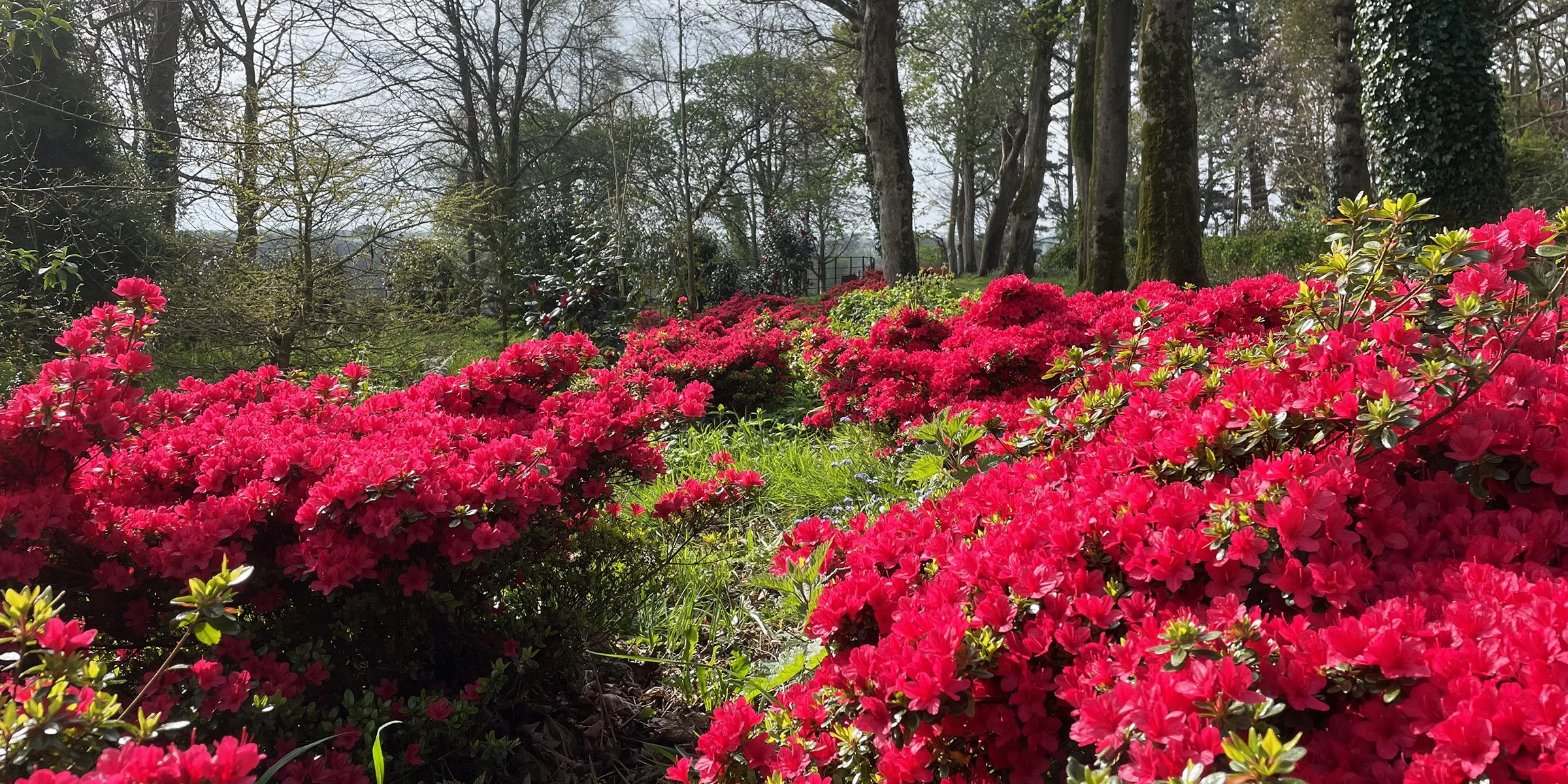
Cornwall & Bath
2701 | 14 to 21 April | 8 days | maximum number 12
Stourhead, Trewithen, Caerhays Castle, Trelissick, Lost Gardens of Heligan, Eden Project, Tremenheere Sculpture Garden, Chygurno, Burncoose Nurseries, Trebah, Bonython, The Garden House, Iford Manor, Bath and more…
Welcome to this private group tour, and welcome to Britain’s far southwest…
Jutting out into the Atlantic Ocean, almost wholly encircled by the sea, Cornwall is England’s most southwesterly county and its long and dramatic coastline, with its picturesque fishing villages and spectacular beaches, has long drawn visitors to it.
So too have its gardens. Washed by the Gulf Stream, Cornwall’s mild coastal climate sustains some of England’s finest gardens and a breathtaking array of plants from all around the world. The season starts early, with some gardens opening as early as January, and this tour takes you to the very best of Cornwall’s many excellent gardens.
Cornwall is a county of many parts, from its dramatic coastline and vast sweeping beaches, via its rolling farmland, sunken lanes and wide open moorland, to its industrial past. Cornwall played an important part in the industrial revolution, and its tin mining and world-class China Clay deposits provided much of the wealth that created today’s gardens. It has a proud maritime heritage too, an excellent reputation for its seafood and its dairy produce.
It is fiercely Celtic too, and is one of the Celtic Nations, something you will notice throughout the county, most obviously in its place names.
We sleep and eat very well in Cornwall and in Bath, staying at hotels we have known and trusted for years, and likewise, dining out at pubs and restaurants we know and trust.
Prices
Per person
Single Alverton/Sharing Queensberry
3,250 GBP
Prices are per person, sharing a double or twin room
Per person
Single Alverton/Single Queensberry
3,690 GBP
3,840 GBP Superior Room (Queensberry only)
Prices are per person, for the single occupancy of one room
Booking, interest, questions and payments
BOOK PLACES ON THIS TOUR
EXPRESS INTEREST & HOLD PLACES ON THIS TOUR
ASK QUESTIONS ABOUT THIS TOUR
Please read the Booking & Paying page and the comments in the additional information below.
Itinerary
Scroll down for a tour area map and additional information – accommodation, eating, and other attractions, etc
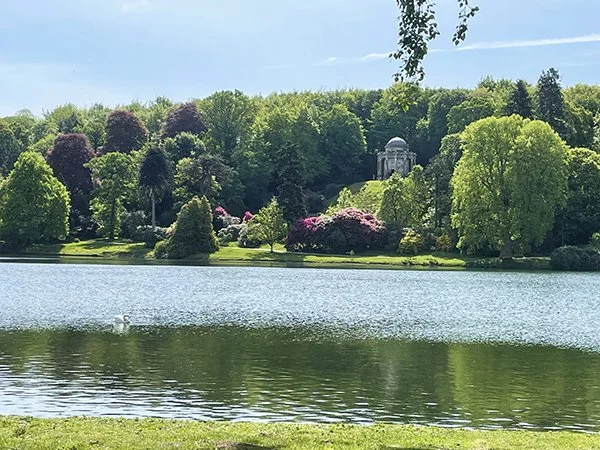
The Temple of Apollo, Stourhead
D1 Wednesday, 14 April
Stourhead
Tim will meet you at the Sheraton Heathrow Hotel at 09:00, so that we can pack the bus and be away by 09:30 to Stourhead for lunch and a walk around these world-famous, eighteenth-century landscape gardens.
“A living work of art” is how one magazine described Stourhead when it first opened in the 1740s. It is a classical garden of its time and has, as its centrepiece, a magnificent lake designed to reflect the surrounding classical temples, mystical grottoes and other follies.
Stourhead is about halfway to The Alverton, our hotel and home for the next five nights, where we plan to arrive late in the afternoon, but in good time to check in and relax before drinks and dinner at the hotel. The Alverton is quietly located, a 5-minute walk from the centre of Truro, Cornwall's county town and cathedral city.
Today's driving is about 250 miles/400 km
D2 Thursday, 15 April
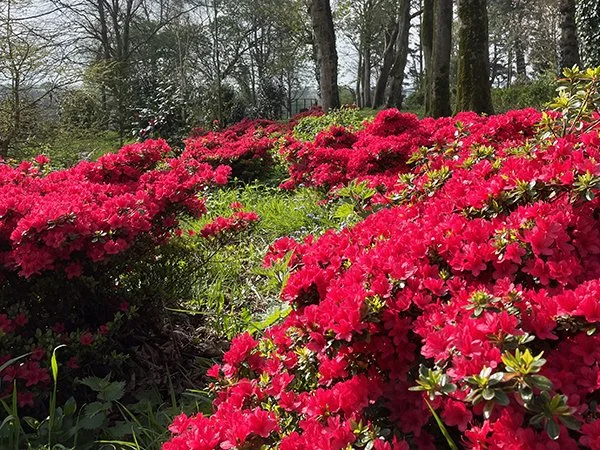
Bright Red Rhododendron Azaleas, Trewithen
Trewithen, Caerhays & Trelissick
After yesterday’s long drive, we stay close to home and spend the day exploring the picturesque Roseland peninsula, diving deep into its wooded valleys and sunken lanes one moment, and emerging to wide open views the next. We start with a visit to one of Cornwall’s great estates, Trewithen, a historic estate internationally renowned for its collection of magnolias and camellias.
Yet more magnolias, camellias and rhododendrons await us at nearby Caerhays, where, according to an old copy of The Good Gardens Guide, “…its collection of camellias and rhododendrons is to be amongst the finest and its magnolias to be unrivalled”. It is a wonderful garden, the collective enterprise of several generations of the Williams family, who, astonishingly, are only the second family to own Caerhays since 1370 (see here).
After lunch, we’ll visit St Just in Roseland, which, according to Sir John Betjeman, is “the most beautiful churchyard on earth”, before crossing the River Fal on the King Harry Ferry to Trelissick for a cup of tea, and to take in the views of the Fal. We return to The Alverton, freshen up and walk into Truro for dinner at Tabb's, one of our favourite restaurants.
Today's driving is about 40 miles/65 km
D3 Friday, 16 April

The forever impressive, house-sized Rhododendron, Flora’s Green, Heligan
Lost Gardens of Heligan & Eden Project
We start the day with a private guided tour of the Lost Gardens of Heligan, the world-famous gardens once lost to a blanket of brambles and weeds. They lay unseen from 1914, when its gardeners marched off to the trenches, to their rediscovery in 1990. It is a story repeated across Britain, but the chance discovery of a motto, etched into the limestone walls in barely legible pencil, “Don’t come here to sleep or slumber”, with the scribbled signatures of the gardeners and dated August 1914, caught the public imagination, and the rest is history – a fascinating history at that.
After lunch, in Heligan’s excellent café, we’ll spend the rest of the day at Eden Project, an internationally renowned project brought to life by a small group of far-sighted people in the late 1990s. They wanted to create something that nobody had ever seen or experienced before, and, rather bravely, they bought an exhausted, steep-sided 60m deep clay pit, and brought it to life. It is an extraordinary place, like no other.
We’ll end the day at Bedruthan Steps, a famous sightseeing spot on the north coast, before returning to The Alverton for dinner.
Today's driving is about 55 miles/90 km
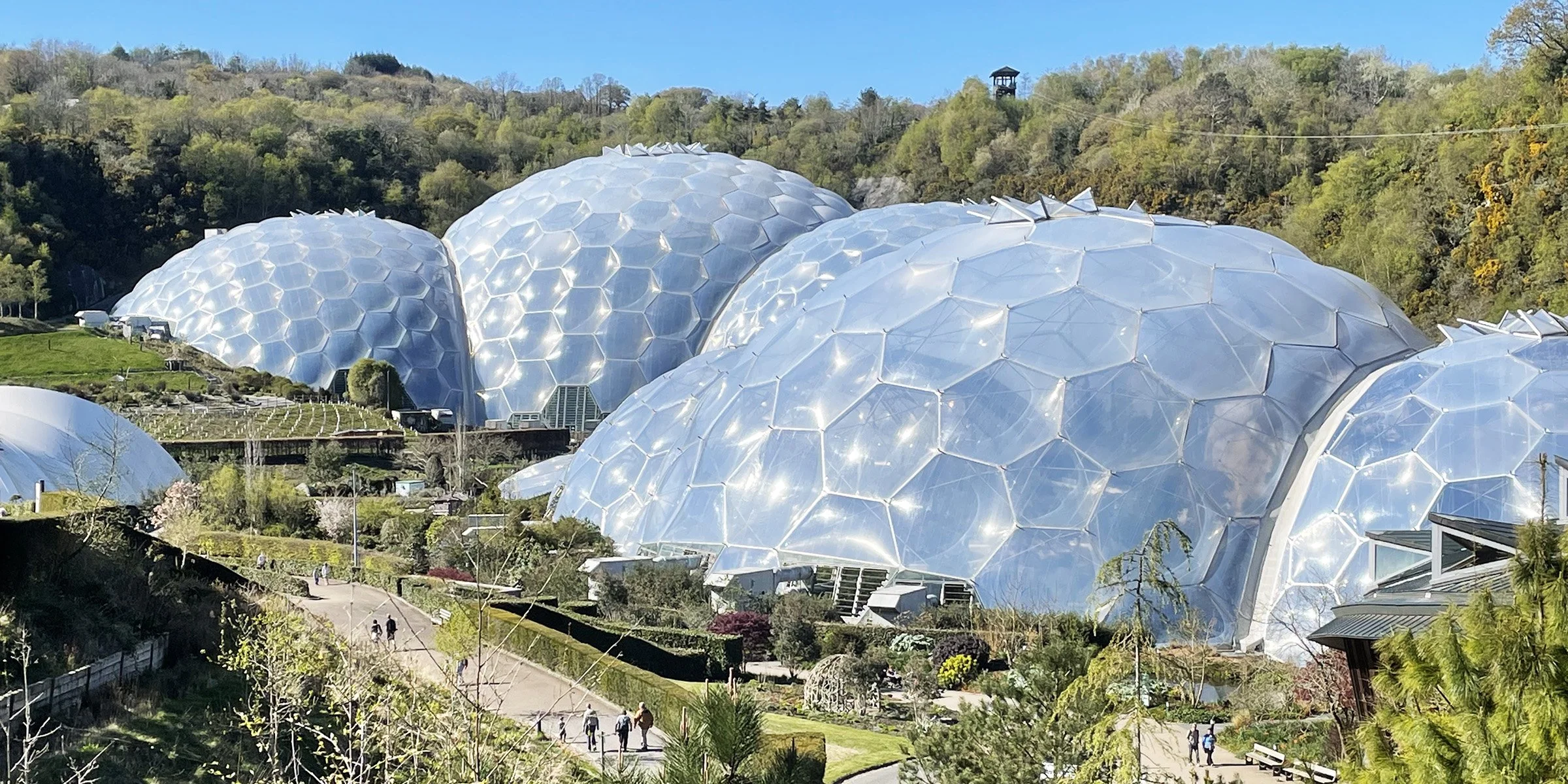
Eden
Eden Project is an educational charity and social enterprise with a mission to demonstrate and inspire positive action for the planet.
Its home in Cornwall was a disused, barren clay mine with no soil or plants, and they transformed this 60m-deep crater into the global garden you see today. The larger biome houses one of the world’s largest indoor rainforests, the smaller one a Mediterranean plantscape, and the outdoor space the temperate gardens, performance areas and play space.
It is a remarkable feat – horticulturally, structurally and socially.
D4 Saturday, 17 April

Looking south from Tremenheere to St Michael’s Mount
Tremenheere Sculpture Garden & Chygurno
Our entire day is spent exploring the Land's End peninsula, Britain’s most southwesterly headland, starting at Tremenheere Sculpture Gardens, one of a new breed of Cornish gardens, the work of Neil Armstrong and Jane Martin, both full-time GPs, who bought the land in 1997 and opened it to the public in 2012. The garden’s natural prospect, combined with some clever large-scale planting, provides the perfect backdrop to contemporary artwork by renowned artists, including pieces by the American artist James Turrell.
After lunch, at Tremenheere’s superb café, and after stopping for the obligatory photos of St Michael’s Mount, we continue west for a private visit to Chygurno, Carol and Robert Moule’s unique, 3-acre cliffside garden overlooking Lamorna Cove. Begun in 1998, with mainly southern-hemisphere shrubs and exotics, it is the nearest thing to vertical gardening you are likely to encounter.
We’ll stop for a brief visit to the Minack Theatre, a remarkable open-air theatre carved into the rugged cliffs above Porthcurno. The creation of Rowena Cade in the early 1930s, we’ll admire its subtropical garden and stunning coastal views, before heading for dinner at The Gurnard’s Head. We’re a little less than an hour from home.
Today's driving is about 90 miles/145 km
D5 Sunday, 18 April
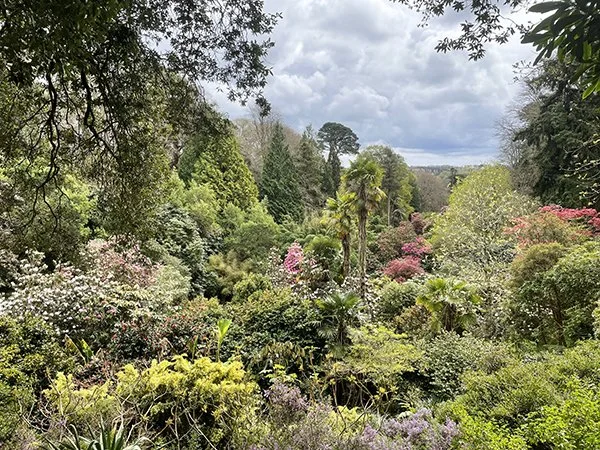
The central ravine, Trebah
Burncoose, Trebah & Bonython
We start the day at Burncoose Nurseries, a superb, well-known nursery, owned by the Williams family of Caerhays, for a walk around the nursery and a peek into the garden.
We then head to the Helford River, to visit one of our favourite gardens, Trebah, a sub-tropical paradise, the cumulative result of almost 200 years of gardening. Charles Fox, a wealthy local businessman, bought the house and garden in 1838 and created a 26-acre pleasure garden. The Fox family, a well-established, influential Quaker family, created six local gardens, including the neighbouring property, stocking them with exotic plants, many of which were wholly unknown in Britain at the time.
After lunch, at Trebah, we drive onto the Lizard Peninsula to visit Bonython, a garden created by its owner, Sue Nathan, a native of South Africa and an established botanical artist. She and her husband, Richard, bought the estate in 1999, since when the gardens have been totally transformed. We visited shortly after it first opened to the public, and have enjoyed watching its progress from nascent plot to established garden.
We return to The Alverton for dinner.
Today's driving is about 40 miles/65 km
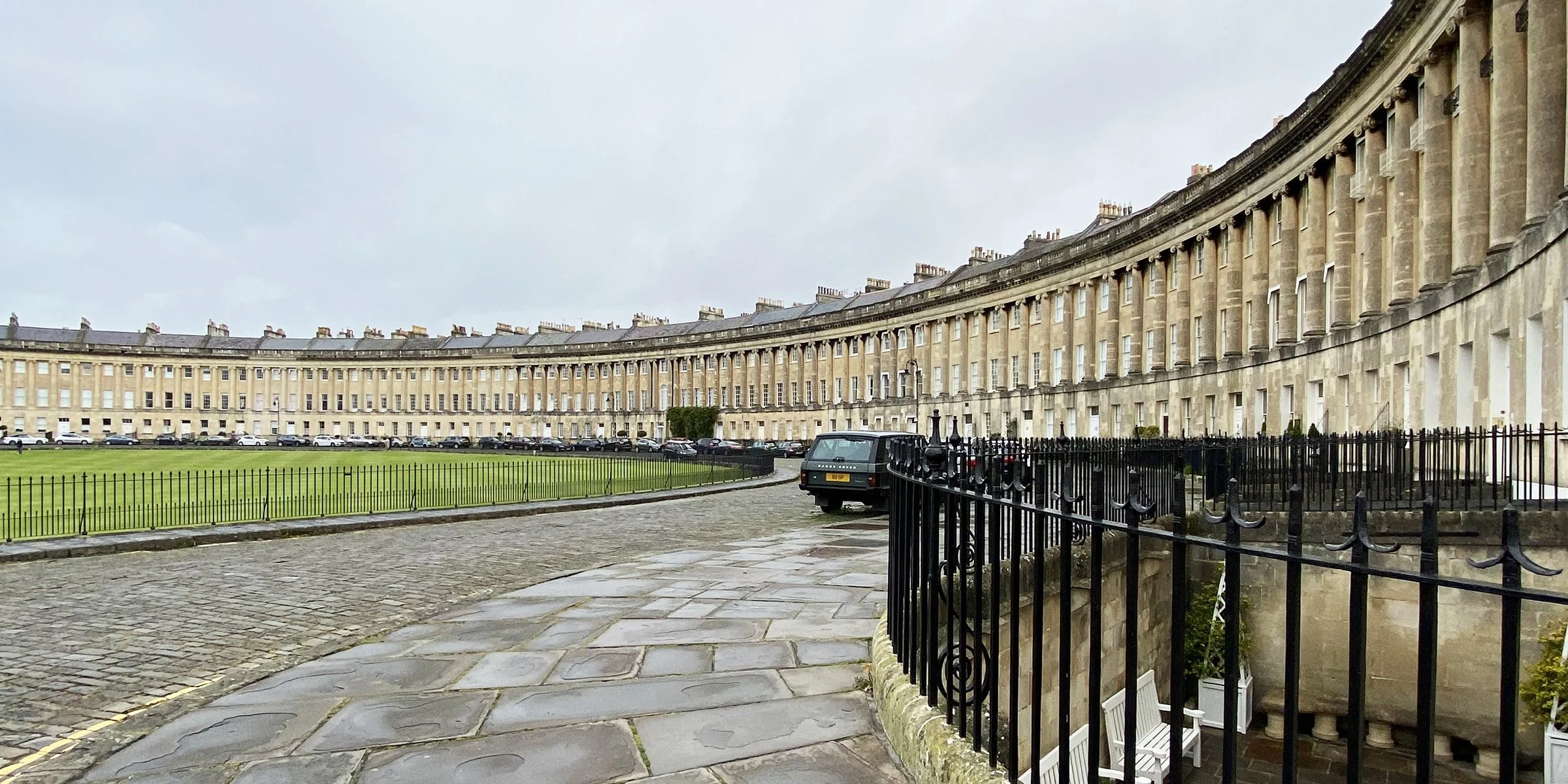
Bath is one of Europe's most elegant towns
Founded by the Celts, stolen by the Romans, made important by the Saxons and rediscovered by the Georgians, it is the perfect town to spend a free day. Bath is independent, creative, unique and stylish – and the only place in Britain where one can bathe in naturally hot spa water.
Named Aquae Sulis when the Romans built their baths in the Avon valley c. 60 AD, in 675 the Saxons founded a Convent, and Bath became a religious centre. In the 17th century, claims were made for the therapeutic properties of the spring water, and Bath became the popular Georgian spa town of Jane Austen’s lifetime. In 1987, Bath was awarded World Heritage status.
D6 Monday, 19 April
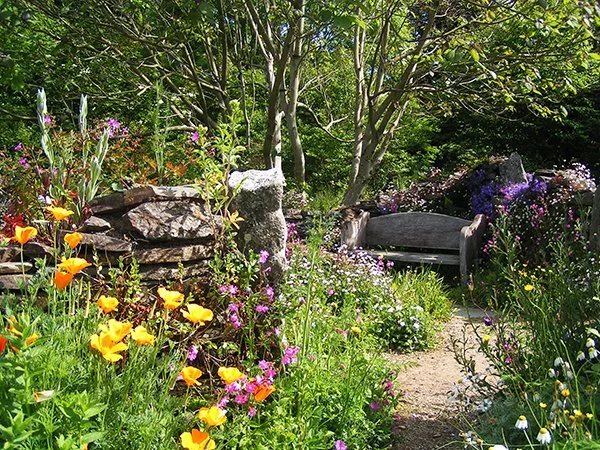
A quiet corner, The Garden House, Devon
The Garden House
We leave Cornwall for the drive to Bath, stopping for lunch and to visit The Garden House, an elegant former vicarage purchased in the 1940s by Lionel and Katharine Fortescue. They, the Fortescues, created their garden over the next 40 years, a garden widely held to be one of the finest gardens in Britain. The property is now a charitable trust, with the garden in the capable hands of Head Gardener, Nick Haworth, who has been in post since 2013 and has overseen a major refurbishment of the original Fortescue garden. The Garden House also has a very decent Tea Room, where we will enjoy lunch before continuing our drive to Bath.
If time and the weather are favourable, we might drive across Dartmoor, but in any case, we plan to arrive in Bath, at The Queensberry, our hotel and home for the next two nights, late in the afternoon, in time to check in and enjoy an early evening stroll through the city, before dinner at The Circus Restaurant, literally, a five-minute walk from our hotel.
Today's driving is about 200 miles/320 km
D7 Tuesday, 20 April
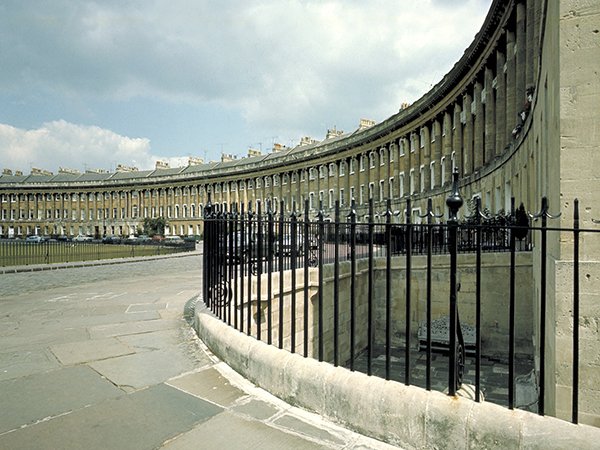
Royal Crescent, Bath
Bath
The day is yours to explore Bath how you will.
You will find Roman history, medieval heritage and some of the finest Georgian architecture all colliding on the same block. The place is bustling with tourists, students and shoppers alike. It is a wealthy city, financially, historically and culturally; its elegance has few rivals.
Did we mention the shopping? It’s some of the best in South West England.
There is much to see and do, including hop-on-hop-off bus tours of the city or a walking tour with Footprint Tours, must-see attractions like Bath Abbey and the Roman Baths, as well as the Assembly Rooms, the Jane Austen Centre and, of course, Bath's new Thermal Spa. Whatever you decide upon, we will assist you in planning your day.
We will gather for drinks at 6 o’clock and a very special end-of-tour dinner at The Olive Tree, The Queensberry's very own Michelin-starred restaurant.
D8 Wednesday, 21 April

The upper terrace, Iford Manor
Iford Manor
Our final visit of the tour is to nearby Iford Manor, home to the Cartwright-Hignett family since 1965, but with a rich history dating to the Normans 1086 Domesday Book, something akin to an early census.
The garden is a unique example of classical and international design, largely created by Harold Peto, the famous Edwardian architect and landscape designer, when Peto made Iford his home from 1899 to 1933. It is, in short, one of the finest and most enjoyable gardens we visit on this or any other of our tours.
It is here, on its steps, where we have the obligatory group photograph (see here)!
After a light lunch in their recently-built café, we take our leave and return to the Sheraton Heathrow Hotel, where the tour ends and where we plan to be by 15:00.
Today's driving is about 110 miles/175 km
Onward travel
Please let us know if you are staying in Britain and don't wish to return to Heathrow. We will assist you, if we can, in getting to your next destination.
Maps and additional information
Tour area map
Additional information
Sleeping
We are staying at two hotels. Our first hotel, for the first five nights, is The Alverton Hotel, a former convent, quietly located five minutes from the centre of Truro. We first stayed at the Alverton’s sister hotel in 2003 and moved to The Alverton in about 2008, and know it well.
Our second hotel, for the final two nights of the tour, is The Queensberry, four elegant townhouses, knocked into one of Bath’s finest hotels. It is a hotel where everything is done extremely well, without an ounce of stuffiness. Likewise, we have stayed at The Queensberry for more than a dozen years, and it is, together with two other hotels, the top tier of hotels we use.
Dining
We dine in at our hotels on four evenings – three evenings, the first, middle and final evening, at The Alverton and once, the final evening, at The Queensberry.
We dine out on three evenings, at Tabb’s, in Truro, on the second evening, at The Gurnard’s Head, on the Land’s End peninsula, on the fourth evening, and at The Circus, in Bath, on our penultimate evening.
We have dined at Tabb’s for the better part of 20 years, and we know Nigel Tabb well, at The Gurnard’s Head or its sister establishment in Mousehole, for over a decade, and at The Circus, again, for over a decade.
Other attractions
Besides the gardens described in the itinerary, we will cross Bodmin Moor and pass Jamaica Inn, made famous by Daphne du Maurier’s eponymous novel, and cross over Dartmoor, home to The Hound of the Baskervilles.
We will visit the beautiful parish church of St Just in Roseland, and explore its garden churchyard, cross the River Fal on the King Harry Ferry, one of the very few remaining chainlink ferries still in operation.
We will visit Bedruthan Steps on the north coast and the Minack Theatre on the south coast, and doubtless we will make other stops too, to explore attractions yet unknown.
Bedrooms & upgrades
Ordinarily, we book standard rooms (however described by the hotel) for all our customers, and these rooms may vary, in size and features, from room to room within the hotel.
Single travellers
Single travellers will have their own room, typically a small double room or, occasionally, a twin room.
Upgrades
If you would like to upgrade your room, please look at the hotel’s website and then contact us with your request.
Please DO NOT contact hotels directly.
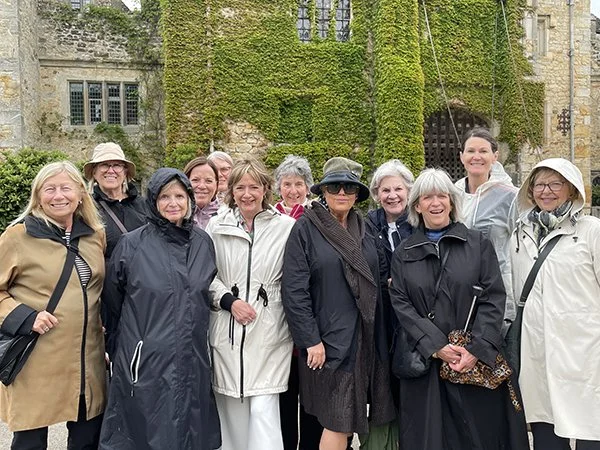
Round One, May 2025
Joining instructions
The meeting arrangements are set out in Day 1 of the itinerary, above, and will be confirmed by email 13 weeks before the tour starts.
Meeting points
The Sheraton Heathrow Hotel is on Colnbrook Bypass, on the northern edge of Heathrow Airport. Click here to see its location in Google Maps.
The hotels we use as meeting points are chosen for their location, the ease of access for the minibus and because they afford our customers, whether staying there or not, a comfortable and secure place to wait.
It is not because we endorse the hotel.
Accuracy & faithfulness
When describing the tour, we try to be as accurate as possible, and when we undertake the tour, we try to be faithful to the itinerary.
However, changes do occur, either necessarily or unavoidably, and we ask for your understanding when this happens.
Useful links
Click here for some useful links.
These links are to notable tourism, heritage, horticultural and cultural organisations, and travel and transport authorities.
Please let us know if any links are dysfunctional.
Acknowledgements
Finally, we would like to acknowledge the assistance of the many guidebooks and websites we use in planning our tours.
Thank you.