Pembrokeshire
and Carmarthenshire
2705 | 3 to 10 June | 8 days | maximum number 12
Wyndcliffe Court, Aberglasney, National Botanic Garden of Wales, Gelli Uchaf, Llwyngarreg, Colby Woodland, Dyffryn Fernant, Upton Castle, Picton Castle, Singleton Botanic, plus a day in St Davids and exploring the coastal island bird sanctuaries…
Welcome to West Wales…
Welcome to the delights of this hidden jewel of South West Wales, where the mighty Atlantic Ocean meets the historic hills of this proud Celtic nation.
Join us for eight wonderful days exploring the gardens, landscapes and coast of South West Wales. Our journey begins in the Wye Valley and travels west through the Brecon Beacons to Carmarthenshire, for our first four nights amongst some of Wales's finest gardens. From here we continue to Pembrokeshire, with its extraordinary coastline, tiny St Davids, a host of offshore islands and a succession of gardens tucked into the countryside.
In Carmarthenshire we visit an unusually rich collection of gardens, from the great National Botanic Garden of Wales and the restored medieval garden at Aberglasney to much smaller, personal and private gardens such as Gelli Uchaf and Llwyngarreg. Further west, our focus shifts to the Pembrokeshire coast, its rugged cliffs, sheltered coves and broad beaches, and its gardens, like Dyffryn Fernant and Colby Woodland, bathed in the mild maritime climate.
Along the way there will be time for country houses and castles, a little Welsh history and literature, and a memorable day in and around St Davids. We’ll also take to the water to explore the island wildlife sanctuaries off the Pembrokeshire coast which, in early June, are at their most spectacular, with thousands of nesting seabirds on the cliffs above us, and grey seals and harbour porpoises in the water around us.
Our homes-from-home are two charming, comfortable family-run hotels, both of them long-standing favourites of The Good Hotel Guide, our most reliable independent hotel guidebook, and we eat well too, at our hotels and a variety of local eateries.
Prices
Per person, sharing
3,220 GBP | 4,510 USD | 3.540 EUR
Prices are per person, sharing a double or twin room
Per person, single occupancy
3,745 GBP | 5,245 USD | 4.120 EUR
Prices are per person, for the single occupancy of one room
Booking, interest, questions and payments
BOOK PLACES ON THIS TOUR
EXPRESS INTEREST & HOLD PLACES ON THIS TOUR
ASK QUESTIONS ABOUT THIS TOUR
Please read the Booking & Paying page and the comments in the additional information below.
Itinerary
Scroll down for a tour area map and additional information – accommodation, eating, and other attractions, etc
Wyndcliffe Court
D1 Thursday 3 June
Wyndcliffe Court
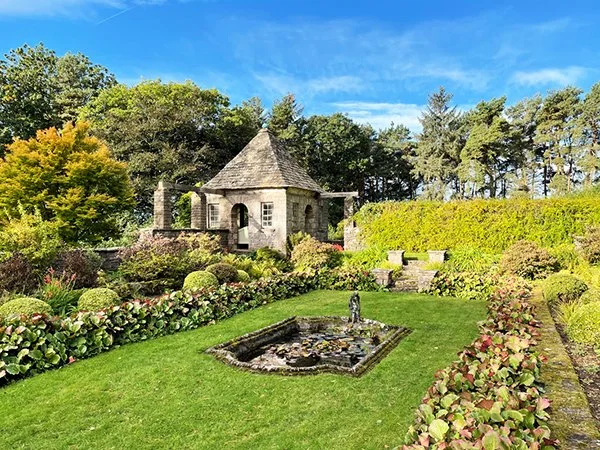
Tim will meet you at the Sheraton Heathrow Hotel at 09:30 and, after loading the minibus, we’ll head west to Wales and Wyndcliffe Court, an exceptional 1920s Arts and Crafts garden created by architect Eric Francis and garden designer H. Avray Tipping. It is laid out on the steeply sloping ground below the house, with terraces and yew topiary, a sunken garden, a lily pond and a newer rose garden, designed by Sarah Price, which should be looking particularly good at this time of year.
After lunch we’ll continue west, through some of the most beautiful scenery in South Wales, before arriving at Tŷ Mawr Country Hotel, our home from home for the next four nights, where we plan to be late afternoon, in good time to settle in before dinner.
Today's driving is about 210 miles/335 km
The landscape…
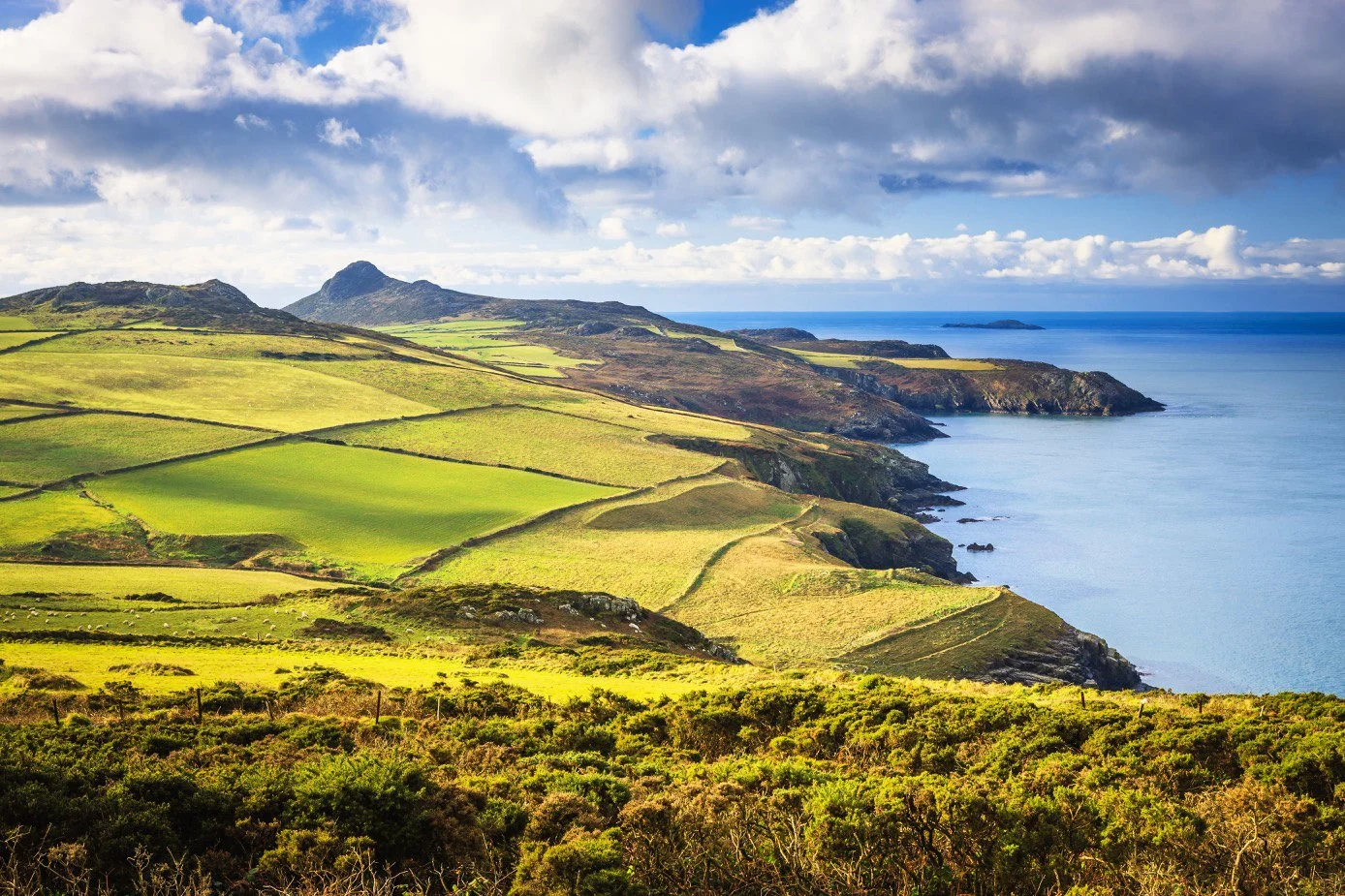
Bounded by the Preseli Hills to the north and surrounded by the rugged Pembrokeshire coast, rolling farmland and wooded valleys stretch through the heart of Carmarthenshire to the uplands and forests of the Cambrian Mountains. It’s a rich and fertile landscape, shaped by its geology and farming, with scattered farms and small fields giving way to open moorland and dramatic coastal scenery.
There’s history too. Prehistoric monuments, Iron Age hillforts and great medieval castles dot the landscape; to say nothing of the remarkable 12th-century cathedral at St Davids.
D2 Friday 4 June
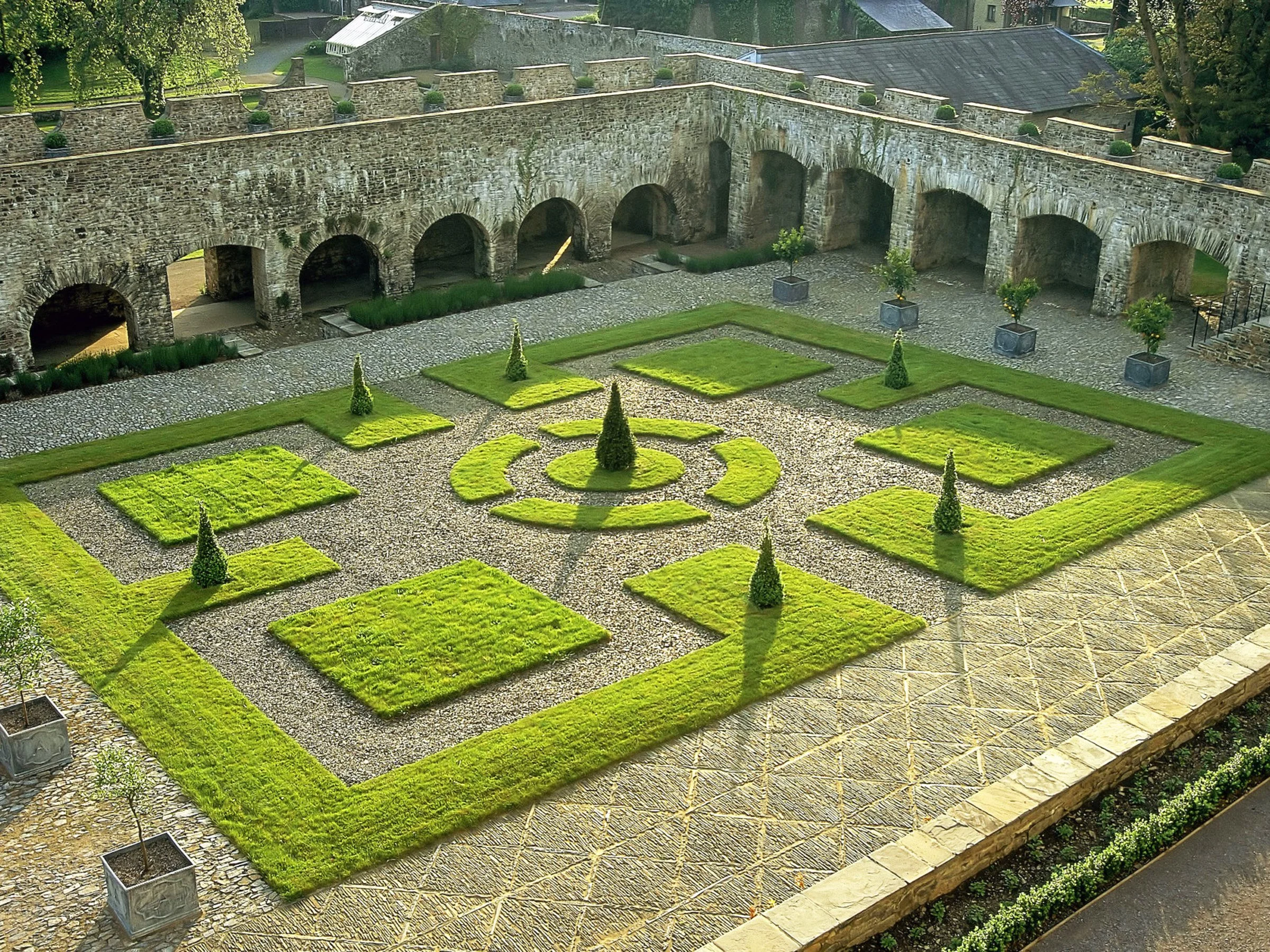
The Cloister Garden at Aberglasney
Llandeilo, Aberglasney & the National Botanic Garden of Wales
Staying close to home, we start today in Llandeilo, an attractive market town well-known for its independent shops, before our morning visit to Aberglasney, a remarkable garden and a great favourite of ours.
Much of what we see at Aberglasney today has been recreated from the remains of a once-important Elizabethan and Jacobean garden. Its celebrated cloister garden, restored walls and intimate planting give it an atmosphere quite unlike anything else we’ll see this week.
After lunch, at Aberglasney, we’ll spend the afternoon at the National Botanic Garden of Wales. Set in the beautiful Tywi Valley, the gardens combine a historic landscape with modern horticulture, and its famous Foster-designed Great Glasshouse, which houses one of the world's largest collections of Mediterranean plants under glass, is the world’s largest single-span glasshouse.
We will dine at nearby Y Polyn, a well-regarded family-run restaurant in the Carmarthenshire countryside.
Today's driving is about 50 miles/80 km
D3 Saturday 5 June
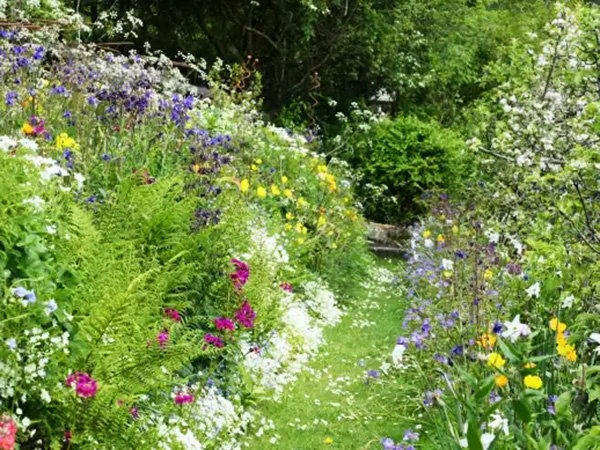
Gelli Uchaf
Cae Hir, Llanerchaeron & Gelli Uchaf
Today’s adventure takes us north to visit three gardens, starting at Cae Hir Gardens, for coffee and cake in this informal and exuberant garden, the creation, over many years, of the late Wil Akkermans, a passionate Dutchman and his family.
We continue north, to Llanerchaeron, an unusually complete 18th-century estate designed by John Nash. The house, gardens, farm buildings and surrounding landscape survive remarkably intact, allowing us to see a complete country estate as it once functioned.
After lunch, at Llanerchaeron, we return south and visit the remarkable gardens at Gelli Uchaf, a 1½ acre garden, created over the 30 years by owners Julian & Fiona Wormald. The garden has several distinct areas around the stone farm buildings, each with its own character and theme; each created to complement its setting and act as a haven for wildlife.
We’ll have dinner at The Forest Arms, the village pub in Brechfa, before returning to Tŷ Mawr.
Today's driving is about 60 miles/95 km
D4 Sunday 6 June
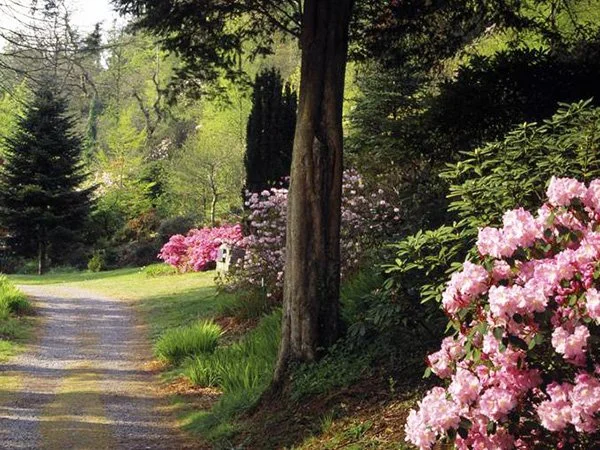
Colby Woodland Gardens
Llwyngarreg, Colby Woodland Garden & Laugharne
This morning we visit Llwyngarreg Garden, a four-acre plantsman's garden created by owners Liz and Paul O’Neill since 2000. They aimed to create drama and year-round colour, growing a lot of plants which naturally thrive in wet West Wales.
We continue to Colby Woodland Garden, a sheltered woodland garden, full of camellias, rhododendrons and azaleas, sitting above the Pembrokeshire coast. A far cry from its industrial past, when children were used to haul the coal out of the narrow coal seams below.
We’ll have lunch at Colby before we explore this part of the coast and Laugharne, the small estuary town so closely associated with the Welsh poet Dylan Thomas. We shall visit the Dylan Thomas Boathouse, his home and workplace during the final years of his life, overlooking the Taf estuary. It is an evocative place, and the surrounding landscape provides an opportunity to understand something of the setting which inspired his later work.
There will be time to explore Laugharne before supper at Brown’s, the poet’s favourite pub.
Today's driving is about 90 miles/145 km
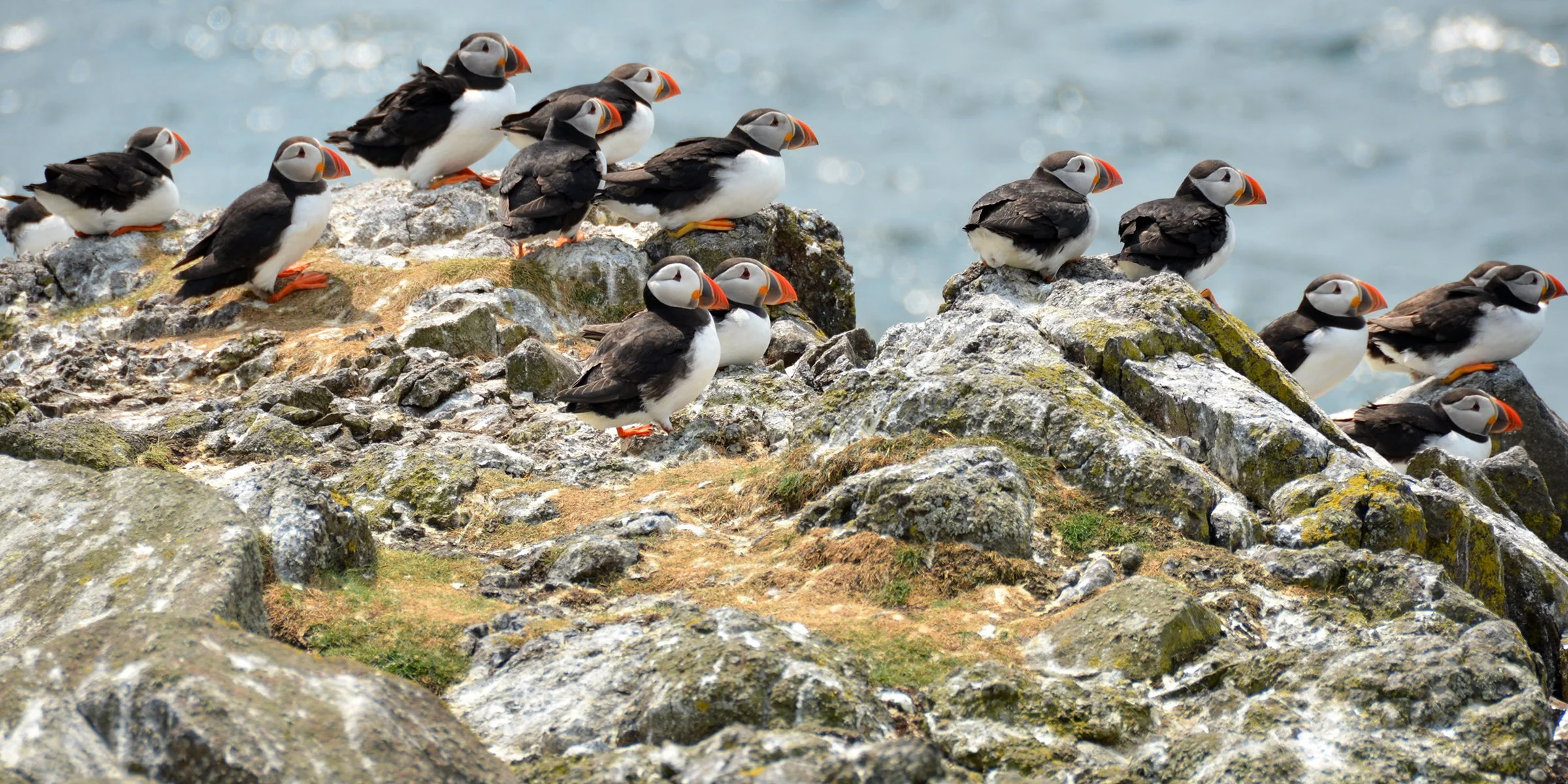
The wildlife…
Sitting off the Pembrokeshire coast, facing the full force of the Atlantic Ocean, lie Ramsey, Skomer and Grassholm. Three small islands. One of the great wildlife spectacles of Wales.
These islands, together with some smaller islets and sea rocks, provide an extraordinary sanctuary for seabirds and marine wildlife. Guillemots, Razorbills and Fulmars inhabit the ledges; Puffins prefer Skomer; and Grassholm, further offshore, is a haven for Gannets.
Skomer and Ramsey are particularly popular with the some 5,000 Atlantic grey seals in the waters around Pembrokeshire, and Ramsey alone has between 500 and 700 pups born each year, making it the largest grey seal pupping site in southern Britain.
The strong currents of Ramsey Sound attract harbour porpoises and the occasional dolphin.
D5 Monday 7 June
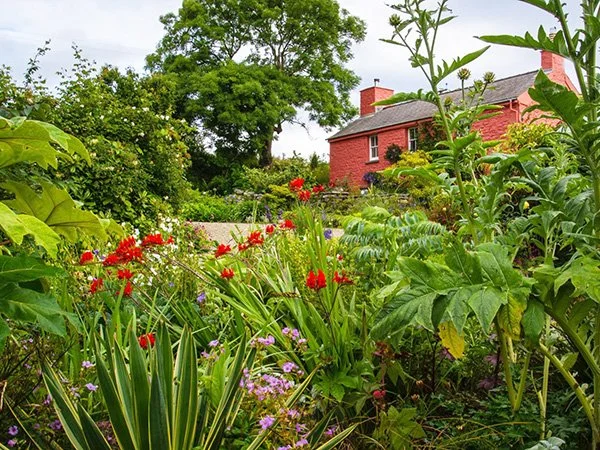
Dyffryn Fernant
Dyffryn Fernant & Melin Tregwynt
We load the minibus, say goodbye to Tŷ Mawr and head west to visit Dyffryn Fernant, an extraordinary garden created by owners Christina Shand & David Allum since 1996. The garden, nestled between the Preselli Hills and the rugged Pembrokeshire coastline, draws its inspiration from its ancient surroundings.
A few of its many highlights include the walled Front Garden, showcasing seasonal container planting; an orchard, with its unique long herbaceous border; the courtyard, a mix of exotic architectural foliage and succulents; and the lush bog garden. It is a delight.
We won’t rush away, but when we do leave, we’ll make our way to Melin Tregwynt, a traditional woollen mill in continuous operation since at least 1841. Now in their third generation, the Griffiths family have been weaving here since Henry Griffiths bought Melin Tregwynt for £760 in 1912. Today, they continue to fly the flag for British manufacturing.
We’ll have lunch in their cafe and visit the mill to watch some weaving, before continuing to Crug Glas, a country house and working farm near St Davids, and our home from home for the final three nights.
As always, we’ll arrive in good time to unpack and relax before drinks and dinner at Crug Glas.
Today's driving is about 70 miles/110 km
D6 Tuesday 8 June

St Davids Cathedral, St Davids
St Davids & the Islands
Today is a day off from gardens, as we devote it to the westernmost tip of Pembrokeshire, its history, its nature and, if you have the urge, a little bit of shopping too!
We begin the day in St Davids, exploring Britain's smallest city. It is a remarkable place and, despite its modest size, was an important centre of pilgrimage for centuries. St Davids Cathedral, a masterpiece of 12th century ecclesiastic architecture, and the remains of its medieval Bishop's Palace are well worth a visit.
We’ll have plenty of time to explore and have lunch before we head down to the Lifeboat Station at St Justinian’s for an exhilarating ride in one of Voyages of Discovery’s fast RIBs. The exact voyage will depend on conditions and the most suitable trip available, but if we can, we’ll take the two-hour Skomer Island trip to see the Puffins and much more besides.
After returning to land, we’ll drive north to Porthgain for the early evening in this interesting, tiny former industrial harbour, and Fish & Chips at The Shed. The Shed is something of an institution in these parts and, whilst Fish & Chips are neither compulsory nor the only thing on the menu, they are, very possibly, the best Fish & Chips you’ll ever have!
Today's driving is about 25 miles/40 km
D7 Wednesday 9 June
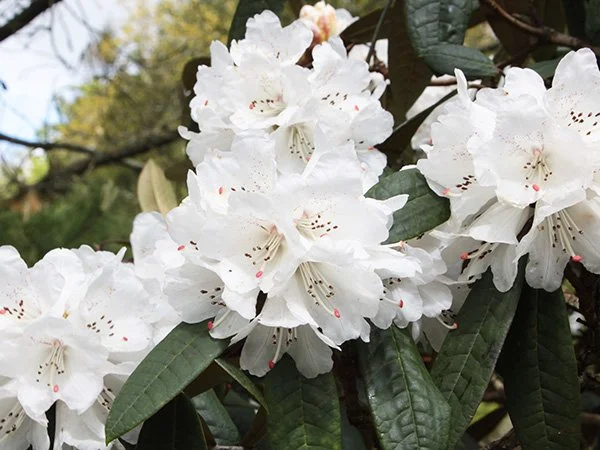
Rhododendrons at Picton Castle
Upton Castle & Picton Castle
Our final full day begins with a visit to Upton Castle, a 13th-century Norman castle built to defend the northern approaches to Pembroke. Tucked away in the Pembrokeshire countryside, its gardens combine some 35 acres of woodland, an 18th-century walled garden and a rose garden, and the relaxed atmosphere of a much-loved private garden.
We’ll continue the day at nearby Picton Castle, starting with lunch in their excellent Courtyard Cafe, a slightly bizarre Spanish-Welsh combination, but go with it; it somehow works!
The gardens at Picton, an RHS Partner Garden, boast one of the most diverse plant collections in Wales. It has ancient woodlands, a beautiful Walled Garden, and a colourful Jungle Garden; it also has a nationally important collection of rare ferns.
We’ll drive home through Pembroke to see Pembroke Castle. Built by the Normans in 1093, it is one of Wales’ most impressive castles and birthplace of Henry VII, the first Tudor King.
And early to Crug Glas for a relaxing evening and our end-of-tour dinner.
Today's driving is about 80 miles/130 km
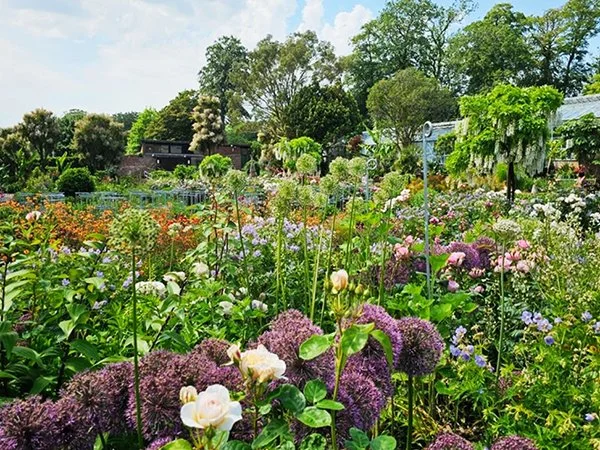
Singleton Botanic Gardens
D8 Thursday 10 June
Singleton Botanical Gardens
After breakfast and loading the minibus, we begin our journey to Heathrow, stopping in Swansea to visit Singleton Botanical Gardens. Originally the estate of the wealthy Vivian family, it was bought by the Swansea Corporation for use as a public park. In 1926, the gardens opened as the ‘Educational Gardens’ until 1991, when they were renamed as the Botanical Gardens Swansea. They contain a renowned double herbaceous border, glasshouses and many mature trees of national importance.
It makes for a gentle conclusion to the tour before we continue east to Heathrow, where the tour will end late in the afternoon at the Sheraton Heathrow Hotel.
Today's driving is about 260 miles/415 km
Onward travel
Please let us know if you are staying in Britain and don't wish to return to Heathrow/Edinburgh Airport/Glasgow with the rest of the group. We will assist you, if we can, in getting to your next destination.
Maps and additional information
Tour area map
Additional information
Sleeping
We will stay in two hotels. Firstly, for the first four nights of the tour, at Tŷ Mawr County Hotel in the village of Brechfa, Carmarthenshire; and secondly, for the final three nights of the tour, at Crug Glâs, just north of St Davids and close to the Pembrokeshire coast.
Eating
We will dine in at our hotel on three nights and dine out on four nights at Y Polyn, Capel Dewi; The Forest Arms, Brechfa; Brown’s, Laugharne; and The Shed, Porthgain.
Other attractions
Besides the stunning seascapes and landscapes, which provide a continuous backdrop to the tour, the other principal attractions are the day in St Davids and the wildlife sea safari, on Day 6 of the tour,
Bedrooms & upgrades
Ordinarily, we book standard rooms (however described by the hotel) for all our customers, and these rooms may vary in size and features from room to room within the hotel.
Single travellers
Single travellers will have their own room, typically a small double room or, occasionally, a twin room.
Upgrades
If you would like to upgrade your room, please look at the hotel’s website and then contact us with your request.
Please DO NOT contact the hotel directly.
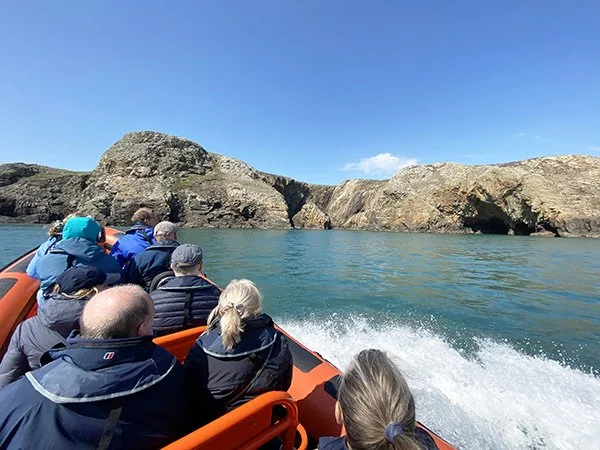
Our 2022 group approaching Ramsey Island aboard a RIB
Joining instructions
The meeting arrangements are set out in Day 1 of the itinerary, above, and will be confirmed by email 13 weeks before the tour starts.
Meeting points
The Sheraton Heathrow Hotel is on Colnbrook Bypass, on the northern edge of Heathrow Airport. Click here to see its location in Google Maps.
The hotels we use as meeting points are chosen for their location, ease of access for the minibus, and because they offer our customers, whether staying there or not, a comfortable and secure place to wait.
It is not because we endorse the hotel.
Accuracy & faithfulness
When describing the tour, we try to be as accurate as possible, and when we undertake the tour, we try to be faithful to the itinerary.
However, changes do occur, either necessarily or unavoidably, and we ask for your understanding when this happens.
Useful links
Click here for some useful links.
These links are to notable tourism, heritage, horticultural and cultural organisations, and travel and transport authorities.
Please let us know if any links are dysfunctional.
Acknowledgements
Finally, we would like to acknowledge the assistance of the many guidebooks and websites we use in planning our tours.
Thank you.