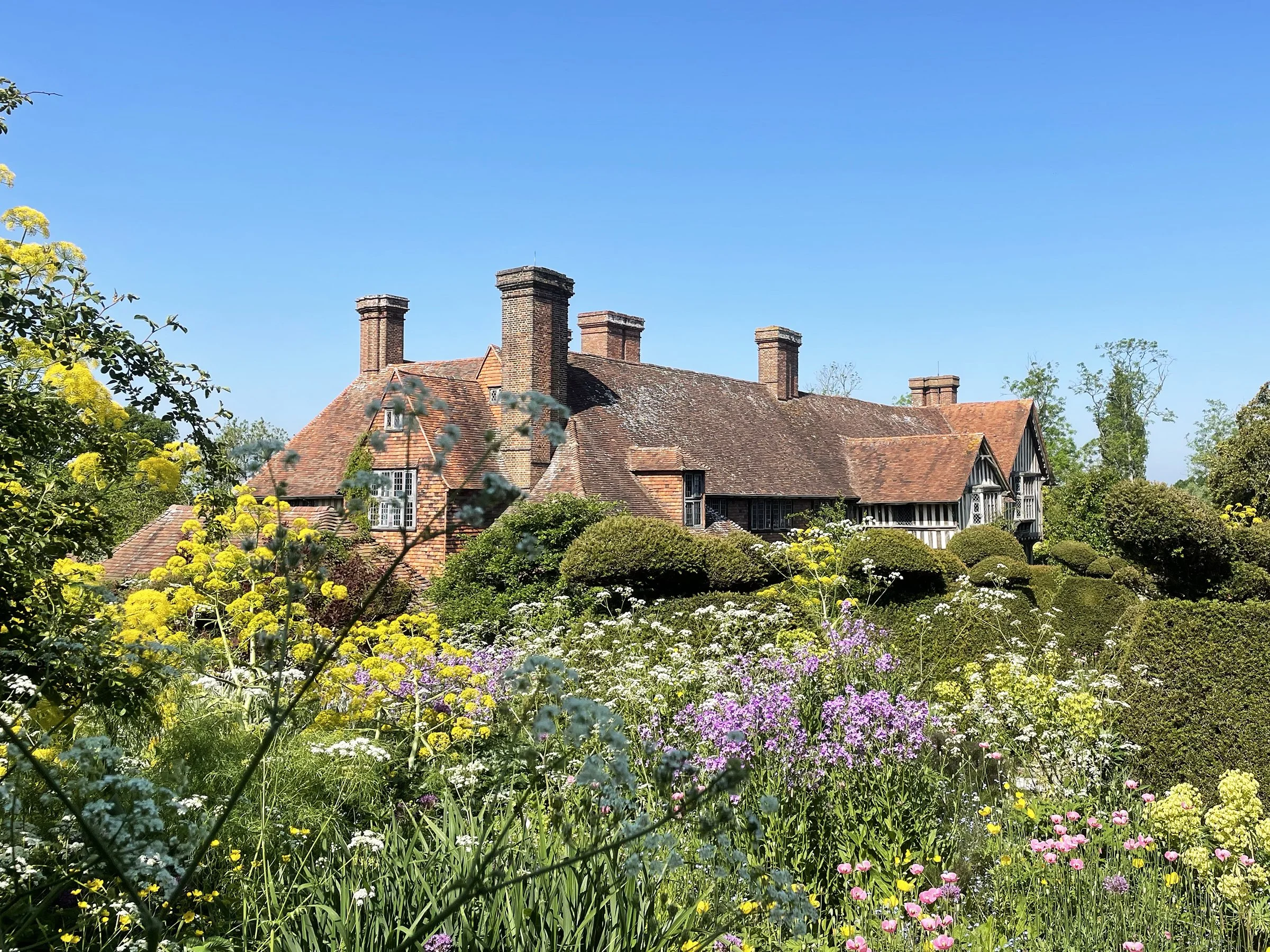
Kent, Sussex & Surrey
2707 | 29 June to 7 July | 9 days | maximum number 10 | private tour
Chartwell, Hever Castle, Great Dixter, Pashley Manor, Sissinghurst Castle, Godinton House, Kew Wakehurst, Nymans, West Dean, Arundel Castle, Petworth House, Parham House, RHS Garden Wisley, Hampton Court Palace, Royal Botanic Gardens Kew and more…
Welcome to the Home Counties…
Welcome to Kent, Sussex and Surrey, three counties awash with some of England’s finest gardens, rich in history, and iconic in their landscapes.
This 9-day extravaganza of high summer gardens takes in some fifteen gardens across Kent, Sussex and Surrey and includes some of England’s finest and most famous gardens. It is a feast of horticultural highlights, a trip of a lifetime.
The tour is set against a daily backdrop of iconic English countryside at the height of summer and includes side trips to viewpoints, villages and sundry places of interest.
We stay in two historic inns and The Petersham Hotel, a famous Richmond landmark; tried-and-tested, independently-owned, comfortable accommodation.
And, as always, we eat well too…
Prices
Per person, sharing
5,320 USD
Prices are per person, sharing a double or twin room
Per person, single occupancy
6,440 USD
Prices are per person, for the single occupancy of one room
Booking, interest, questions and payments
BOOK PLACES ON THIS TOUR
EXPRESS INTEREST & HOLD PLACES ON THIS TOUR
ASK QUESTIONS ABOUT THIS TOUR
Please read the Booking & Paying page and the comments in the additional information below.
Itinerary
Scroll down for a tour area map and additional information – accommodation, eating, and other attractions, etc
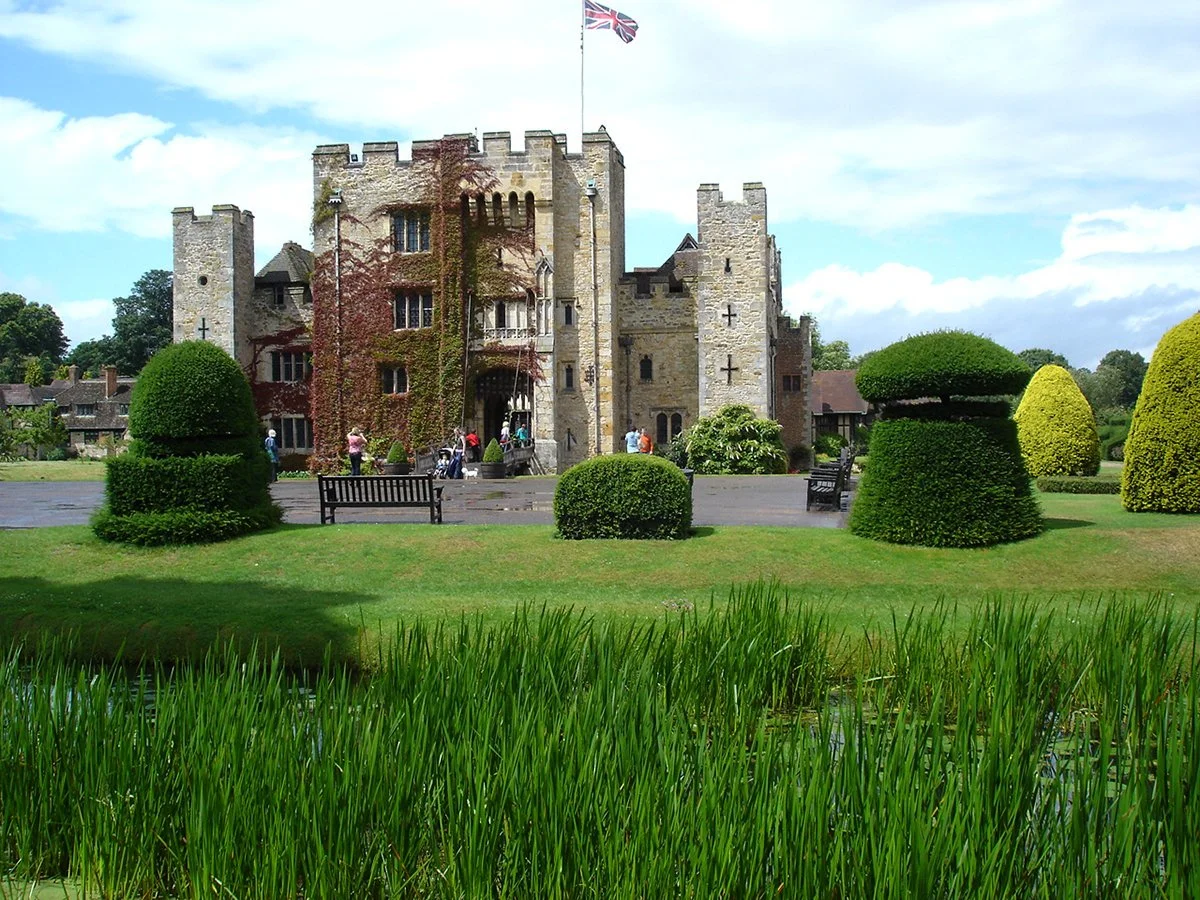
Hever Castle
D1 Tuesday, 29 June
Chartwell & Hever Castle
Tim will meet you at the Hilton London Heathrow Airport at 09:00 so we can load the minibus and be away by about 09:30.
It’s a little over an hour’s drive to our first visit, to Chartwell, the much-loved family home of Winston and Clementine Churchill for forty years, from when they bought it in 1922 until shortly before Churchill’s death in 1965. Churchill loved Chartwell; it was here that he could relax, away from the spotlight when in office, and where, when out of office, he could busy himself with writing, painting and building brick walls. In or out of office, it was always a family home and a place of entertainment.
After lunch, at Chartwell, we’ll visit nearby Hever Castle, the 13th-century childhood home of Anne Boleyn, Henry VIII’s second wife and mother of Elizabeth I. More recently, Hever was home to William Waldorf Astor, a wealthy Anglo-American, who, in the early 20th century, used his great fortune to restore and extend the Castle and lay out the gardens. We will concentrate on the gardens, which are as wonderful as they are extensive, but visiting the castle will be an option should you wish.
From Hever, we drive south to Hawkhurst and to The Queen’s Inn, our home-from-home for the next three nights, where we’ll arrive in good time to check in and relax before drinks and dinner.
Today's driving is about 75 miles/120 km
D2 Wednesday, 30 June
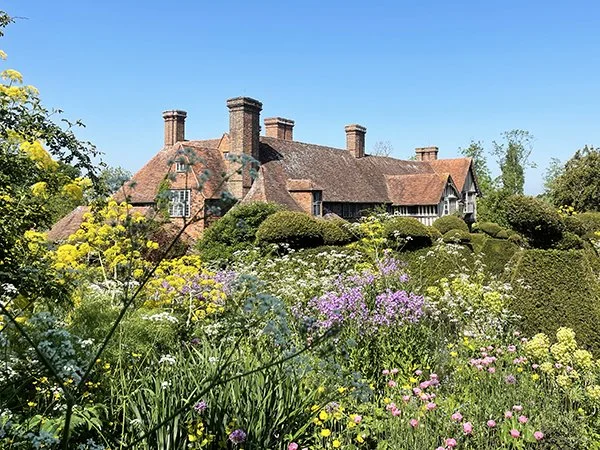
Great Dixter house from the Topiary Garden
Dixter, Pashley & Rye
Our day starts at Great Dixter with private early entry to the garden, a golden hour before the gates open to the general public. Great Dixter’s gardens are magnificent at every turn, bountiful and inspirational in equal measure, and deservedly world-famous. Created by Christopher Lloyd and maintained by him until his death in 2006, they are today in the care of a team led by Fergus Garrett, Christopher Lloyd’s trusted lieutenant.
We leave Dixter to visit nearby Pashley Manor for lunch and the early afternoon at this splendid 11-acre English Country Garden par excellence. It is consistently one of our customers’ favourite gardens and, with its sweeping lawns, well-planted borders, box hedges, historic walled garden and majestic trees, it’s easy to see why.
Mid-afternoon we’ll head into Rye for a couple of hours to explore this bustling medieval harbour town and its scenic cobbled streets, hilltop church and wide range of independent shops, before dinner at The Plough, a delightful pub we discovered in 2026.
Today's driving is about 50 miles/80 km
D3 Thursday, 1 July
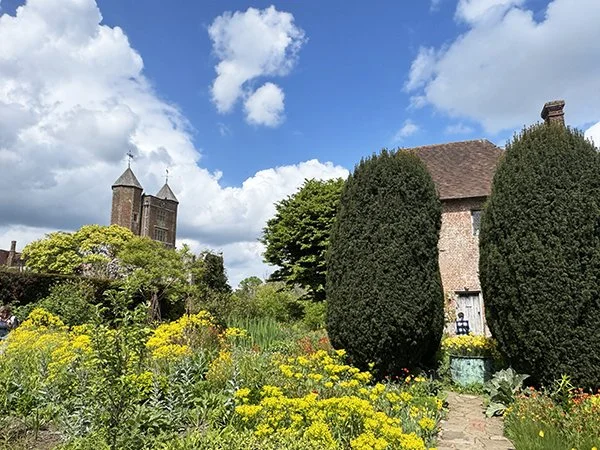
The Cottage Garden, Sissinghurst Castle Gardens
Sissinghurst, Godinton & the Downs
We start the day at Sissinghurst Castle, the world-famous gardens created by Harold Nicholson and Vita Sackville-West in the 1930s. The gardens have stood the test of time and remain one of Britain's best-loved and most iconic gardens. We’ll arrive in good time to be among the first into the gardens and have plenty of time too to see the vegetable gardens, visit Vita’s writing room in the Tower, see inside the Oast Houses, and enjoy some lunch.
Kent has so many good gardens, several of which we’ve never seen, and this afternoon we’ll explore one such garden, at Godinton House, a largely 16th-century Jacobean house built around a 14th-century Great Hall. The house isn’t open, but the 12 acres of mainly Blomfield’s late 19th-century-designed garden should give us plenty to interest us before we head onto the Kent Downs to take in the views across the Kent countryside from above the Devil’s Kneading Trough.
Dinner at The Queen’s Inn.
Today's driving is about 60 miles/100 km
D4 Friday, 2 July
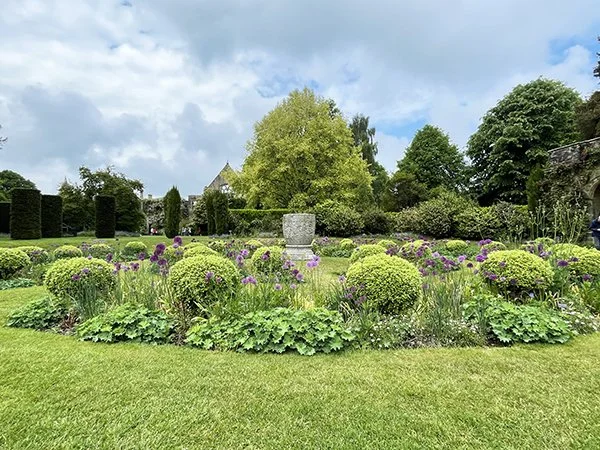
The Sunk Garden, Nymans
Kew Wakehurst & Nymans
After loading the minibus, we leave Hawkhurst and cross the Sussex Weald to spend the morning exploring Kew Wakehurst, Kew’s extensive country estate. Largely the creation of two avid gardeners, Gerald Loder, who purchased the estate in 1903 and spent 33 years developing the gardens, and Sir Henry Price, Loder’s successor, who left Wakehurst to the nation in 1963, Kew has cared for and developed it ever since.
Wakehurst is also home to the Millennium Seed Bank, an internationally important underground store of over 2.4 billion seeds, and you can watch its scientists and technicians prepare seeds for the vault.
After lunch, at Wakehurst, we continue west to visit the gardens at Nymans, a beautiful garden set around romantic ruins and long-regarded as a plantsperson’s paradise. It has rare and unusual plant collections, a wonderful 1920s-inspired Rose Garden, sumptuous summer borders and views across the Weald.
And then to Midhurst and The Spread Eagle, a former coaching inn and our home for the next three nights, where we’ll arrive in good time to relax before dinner.
Today's driving is about 80 miles/130 km
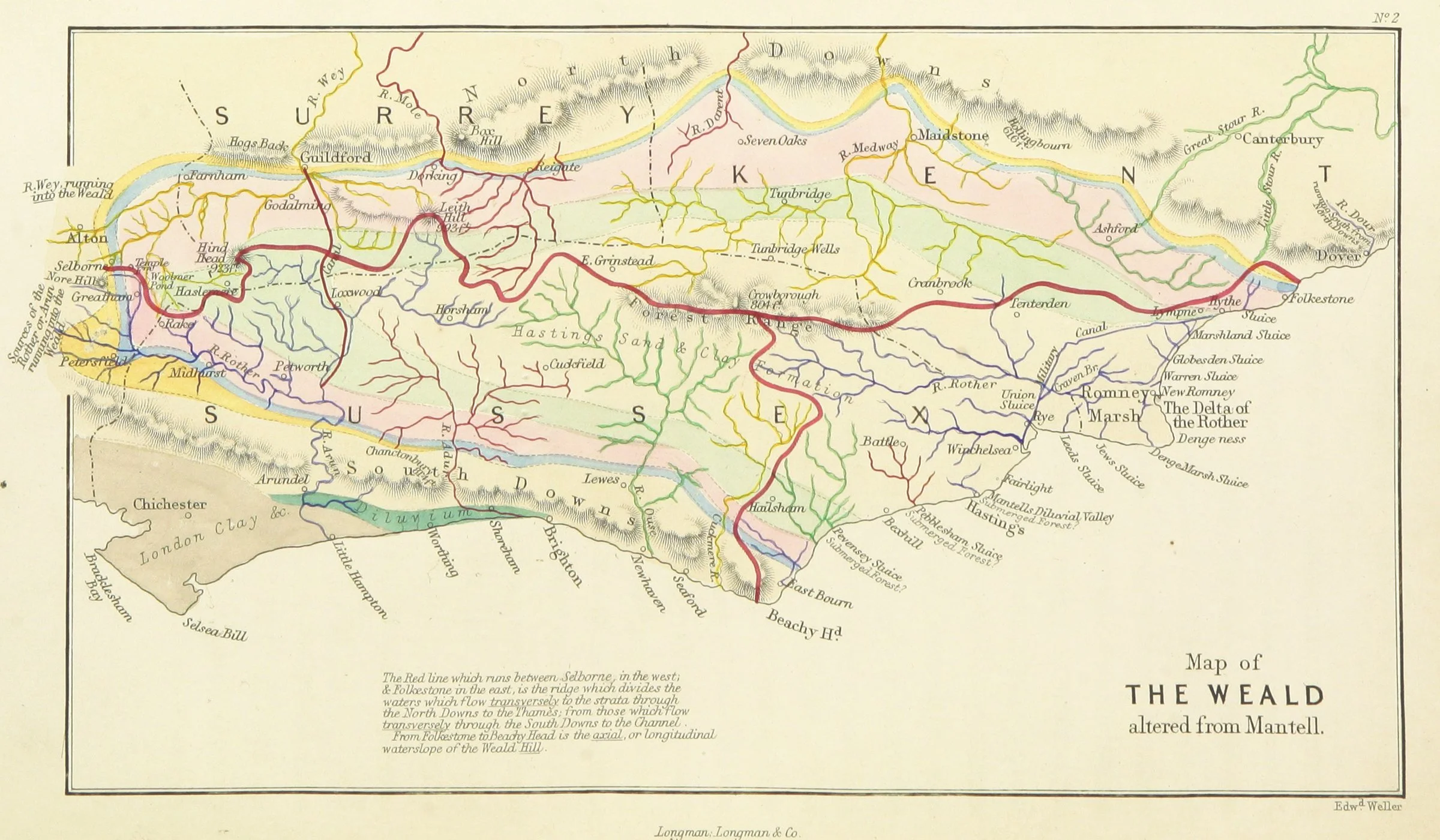
Up on the Downs, crossing the Low and High Weald
The North and South Downs are two distinct chalk ridges laid down between 75 and 90 million years ago by layer after layer of marine deposits. Movements in the earth’s crust caused this otherwise flat sheet of chalk to form a dome stretching across Kent, Sussex & Surrey. Subsequent weathering and erosion washed the dome away, exposing the underlying geology and leaving the two chalk escarpments we see today.
The dome’s erosion exposed harder sandstones, which form the high land and ridges of the High Weald, and softer clays which form the river basins of the Low Weald.
The word ‘Down’ is a derivation of the Celtic word Dun, originally meaning hill fort, while the word ‘Weald’ came to us from Old Saxon meaning wood or forest.
D5 Saturday, 3 July
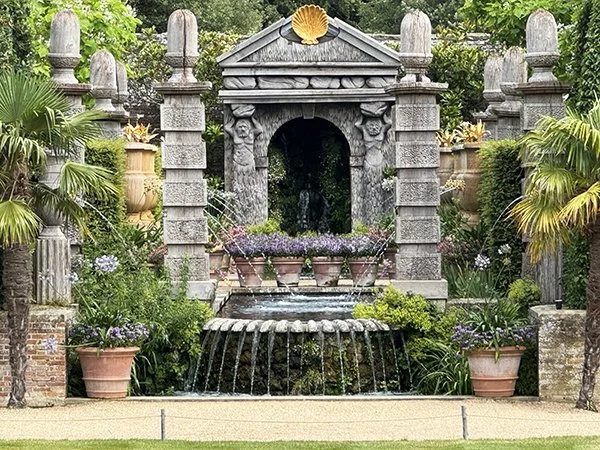
The Tropical Garden, Arundel Castle
West Dean & Arundel Castle
We start the Sussex leg of our tour with a visit to the gardens at West Dean, an estate nestled at the foot of the South Downs and, today, a school of arts and conservation. The garden is one of the great restored gardens of Southern England and, at its heart, are the glorious Walled Kitchen Gardens, housing an impressive collection of some 13 restored Victorian Glasshouses. Outside the walls is a peerless Harold Peto pergola, sweeping lawns and an extensive arboretum.
We’ll have lunch at West Dean’s garden-to-plate kitchen before an afternoon exploring Arundel, a bustling market town on the River Arun dominated by Arundel Castle, the 11th-century seat of the Dukes of Norfolk. The award-winning gardens surround the castle and include almost everything, from award-winning Tropical Gardens to quirky Stumperies, and from the wonderfully scented Rose Garden to the peaceful Wildflower Garden, and much more besides.
We’ll have time to explore the town and its enticing shops before dinner on the other side of the river at the George at Burpham, another wonderful pub we discovered in 2026.
Today's driving is about 50 miles/80 km
D6 Sunday, 4 July
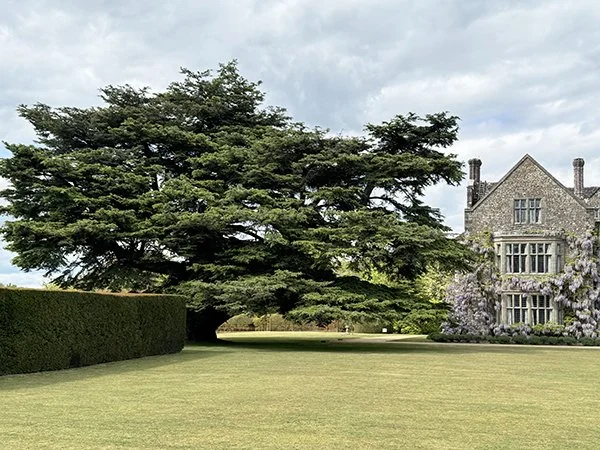
Majestic Cedar of Lebanon at Parham House
Petworth, Parham & Revolution
Our day starts at nearby Petworth House, an extraordinary 17th-century house boasting a fine art collection, including works by Van Dyck, Turner and Gainsborough, and an 18th-century ‘Capability’ Brown-designed Pleasure Garden, complete with serpentine paths, formal beds and a woodland walk, all set in a 700-acre ‘Capability’ Brown landscaped park.
We’ll leave Petworth late morning for lunch and the afternoon at Parham House, an exquisite 16th-century Elizabethan house in the most beautiful setting. The gardens comprise seven acres of Pleasure Grounds, laid out in the 18th century, and a wonderful four-acre Walled Kitchen Garden with wide herbaceous borders, a vegetable garden, roses and an orchard.
From Parham we’ll return early to the Spread Eagle for a celebratory Revolutionary Dinner.
Today's driving is about 30 miles/50 km
D7 Monday, 5 July
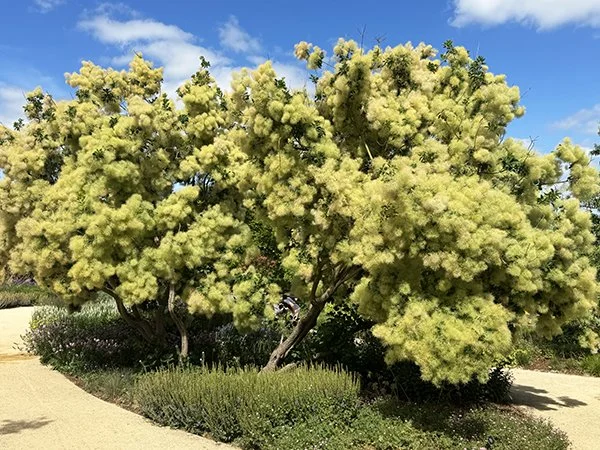
Smoke Trees in full bloom at Wisley
RHS Garden Wisley
We say farewell to The Spread Eagle and set off on the next leg of our tour, starting at RHS Garden Wisley for an extended visit to this inspirational, world-class garden. RHS Garden Wisley is both the headquarters of the Royal Horticultural Society and its flagship garden; one of five RHS gardens, the others being Harlow Carr, Hyde Hall, Rosemoor, and Bridgewater.
In 1878, George Fergusson Wilson, a wealthy RHS member, purchased sixty acres of farmland and, with the assistance of Gertrude Jekyll, established the Oakwood Experimental Garden, where he attempted to "make difficult plants grow successfully". The RHS moved from its Chiswick HQ in 1903, when it was given the site.
Today, Wisley is a 240-acre garden with vast collections, trial gardens, a learning centre, numerous formal and informal decorative gardens, several glasshouses and an extensive arboretum. By any measure, it is a world-class garden.
We will arrive at The Petersham mid-afternoon, allowing time for a riverside walk or to explore Richmond or neighbouring Richmond Park, before drinks and dinner overlooking the Thames.
Today's driving is about 50 miles/80 km
D8 Tuesday, 6 July
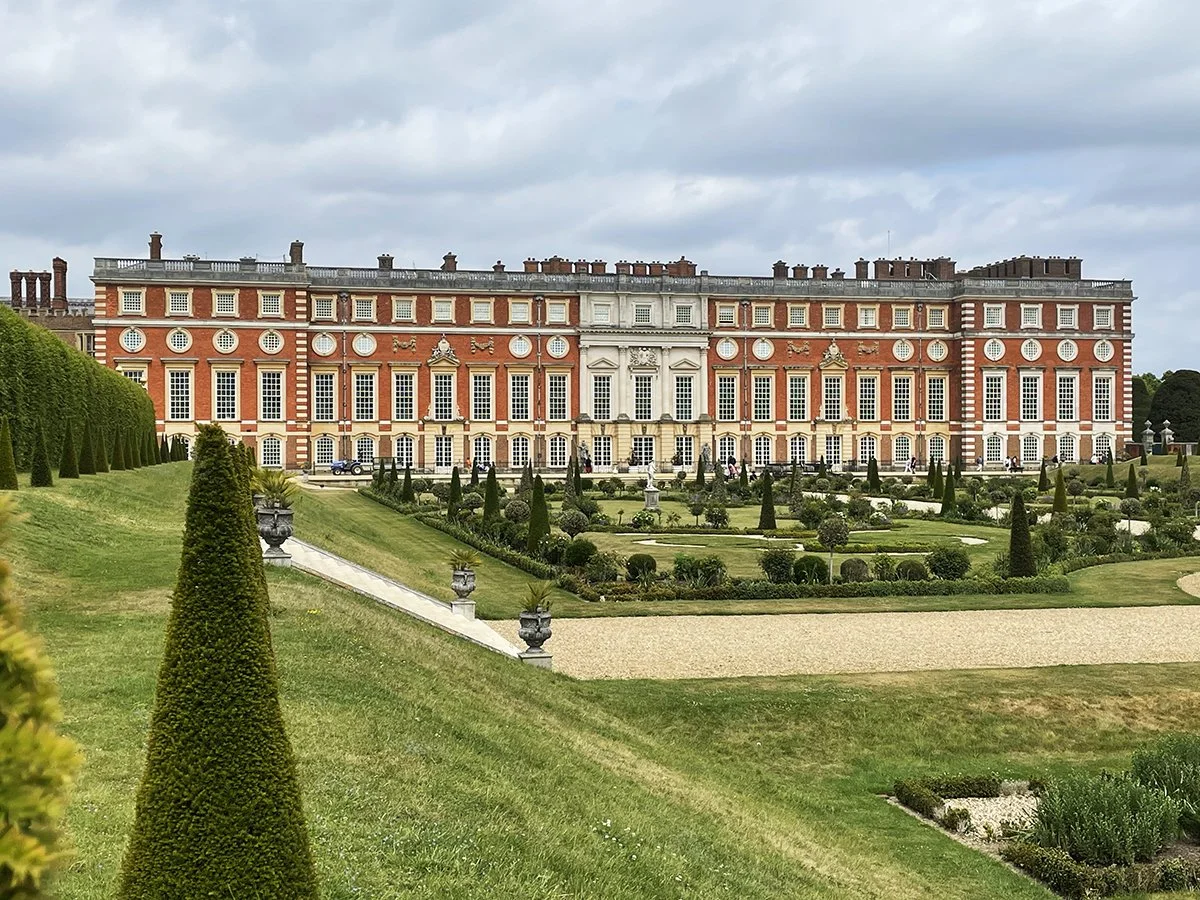
Christopher Wren’s 17th century Baroque Façade and the re-imagined Privy Gardens
Hampton Court Palace & the River Thames
We spend our penultimate day exploring Hampton Court Palace, inside and out.
Famously, Cardinal Wolsey built Hampton Court Palace in the early 16th century, but didn’t take into account just how jealous his king, Henry VIII, might be, and it was taken from him. Fast forward a couple of hundred years to 1689, when William III & Mary II ascended the throne and commissioned Christopher Wren (of St Paul’s Cathedral fame) to build an elegant, baroque extension to the palace. Later still, Georgian kings and princes occupied the palace until 1737, when much of it was given over to impoverished aristocrats as 'grace and favour' apartments; some of which still exist.
It’s a fantastic place, with grand and well-maintained gardens.
Late in the afternoon we’ll return to Richmond by Thames Riverboat, cruising one of the finest stretches of the Thames and peering into the back gardens of those fortunate enough to live on the river. It is a thoroughly pleasurable way to while away an hour or two on a summer’s afternoon.
We’ll finish the day with a special end-of-tour dinner at The Petersham.
Today's driving is about 10 miles/16 km
D9 Wednesday, 7 July
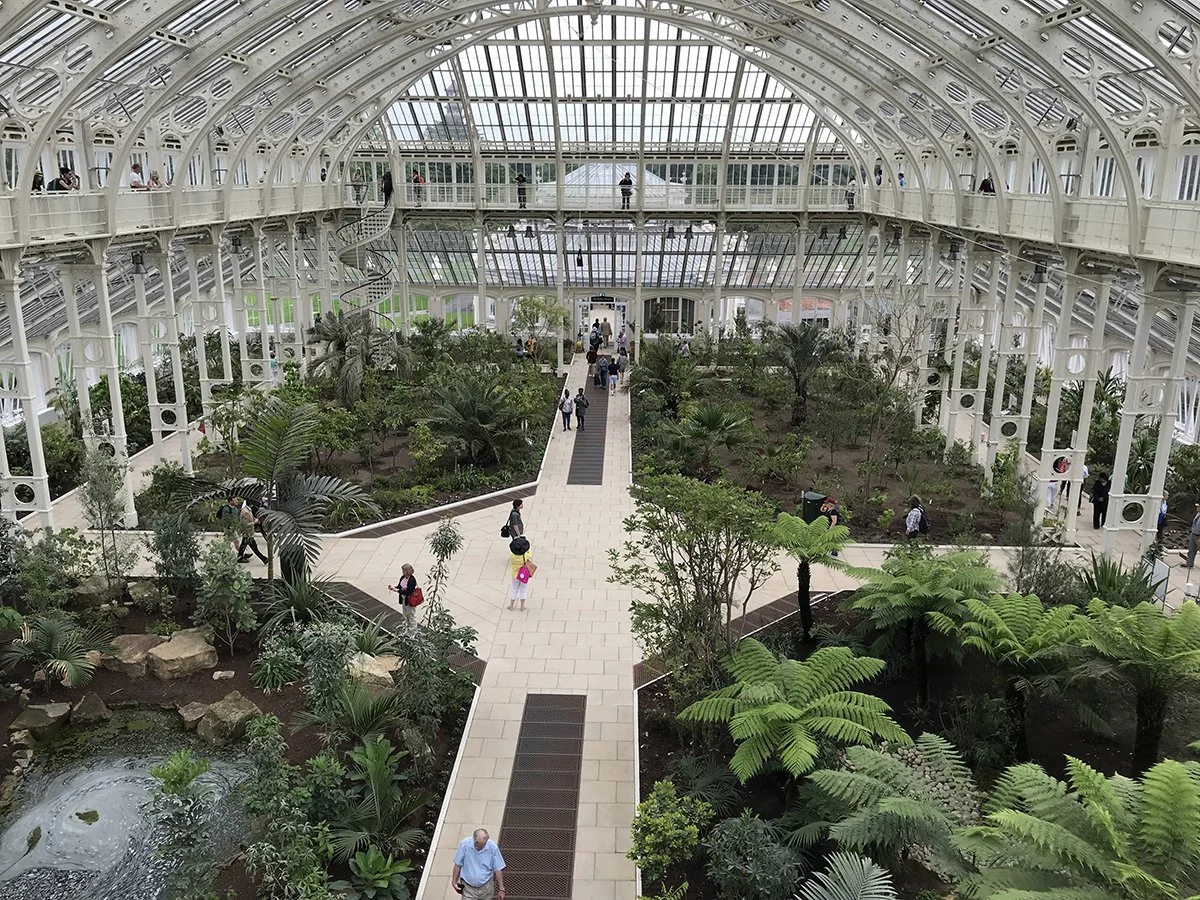
The recently renovated Temperate House, Kew
Royal Botanic Gardens, Kew
Our final garden is the Royal Botanic Gardens, Kew . Known universally and more familiarly as Kew Gardens, it is less than five miles from The Petersham, and we’ll have much of the day exploring its horticultural delights.
Founded in 1759, Kew boasts one of the largest and most diverse botanical collections, and its standing in the horticultural world is second to none. The living collections, which date to 1840, include some of the 27,000 taxa; the herbarium, one of the largest in the world, has over 8.5 million preserved plant and fungal specimens; the library contains more than 750,000 volumes, and the illustrations collection alone contains more than 175,000 prints and drawings of plants. It is Britain’s most frequently visited garden, a World Heritage Site and the very definition of exceptional.
Despite its 330-acre size, you’ll get to see a lot of it and still have time for lunch before we return to the Hilton London Heathrow Airport, where the tour ends.
Today's driving is about 15 miles/25 km
Onward travel
Please let us know if you are staying in Britain and don't wish to return to Heathrow/Edinburgh Airport/Glasgow with the rest of the group. We will assist you, if we can, in getting to your next destination.
Maps and additional information
Tour area map
Additional information
Sleeping
We will stay at three hotels. Firstly, at The Queen’s Inn, Hawkhurst, in Kent, for three nights; then at The Spread Eagle, Midhurst, in Sussex, for another three nights; and at The Petersham, in Richmond, for the final two nights.
We have stayed at the Queen’s Inn and The Spread Eagle on multiple occasions in the past two years, and at The Petersham on numerous occasions since our first Chelsea Flower Show tour in 2012.
Dining
We will dine at The Queen’s Inn and The Spread Eagle on the first and final evenings of our respective stays, and dine out at The Plough Rye and The George at Burpham on the two middle evenings.
We will dine at The Petersham on our first evening and, on the second evening, either hold our end-of-tour dinner in The Cellars at The Petersham or dine out in Richmond at A Cena, a superb Italian restaurant.
We will also have a picnic on one of the days.
Other attractions
Besides the gardens described in the itinerary, we plan to visit The Devil’s Kneading Trough on the North Downs, to take in the views and visit various villages on the North and South Downs and throughout The Weald. We will also have time to explore the towns of Rye, Midhurst and Richmond and Richmond Park.
Bedrooms & upgrades
Ordinarily, we book standard rooms (however described by the hotel) for all our customers, and these rooms may vary, in size and features, from room to room within the hotel.
Single travellers
Single travellers will have their own room, typically a small double room or, occasionally, a twin room.
Upgrades
If you would like to upgrade your room, please look at the hotel’s website and then contact us with your request.
Please DO NOT contact hotels directly.
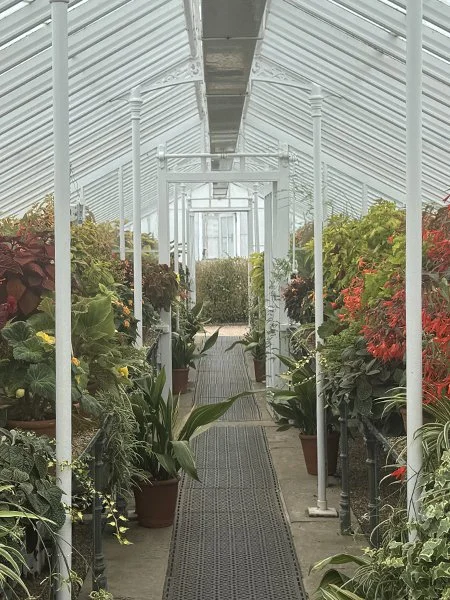
The Victorian Glasshouses, West Dean
Joining instructions
The meeting arrangements are set out in Day 1 of the itinerary, above, and will be confirmed by email 13 weeks before the tour starts.
Meeting points
The Hilton London Heathrow Airport is directly adjacent to Terminal 4, London Heathrow Airport, on the south side of the airport. Click here to see its location in Google Maps.
The hotels we use as meeting points are chosen for their location, the ease of access for the minibus and because they afford our customers, whether staying there or not, a comfortable and secure place to wait.
It is not because we endorse the hotel.
Accuracy & faithfulness
When describing the tour, we try to be as accurate as possible, and when we undertake the tour, we try to be faithful to the itinerary.
However, changes do occur, either necessarily or unavoidably, and we ask for your understanding when this happens.
Useful links
Click here for some useful links.
These links are to notable tourism, heritage, horticultural and cultural organisations, and travel and transport authorities.
Please let us know if any links are dysfunctional.
Acknowledgements
Finally, we would like to acknowledge the assistance of the many guidebooks and websites we use in planning our tours.
Thank you.